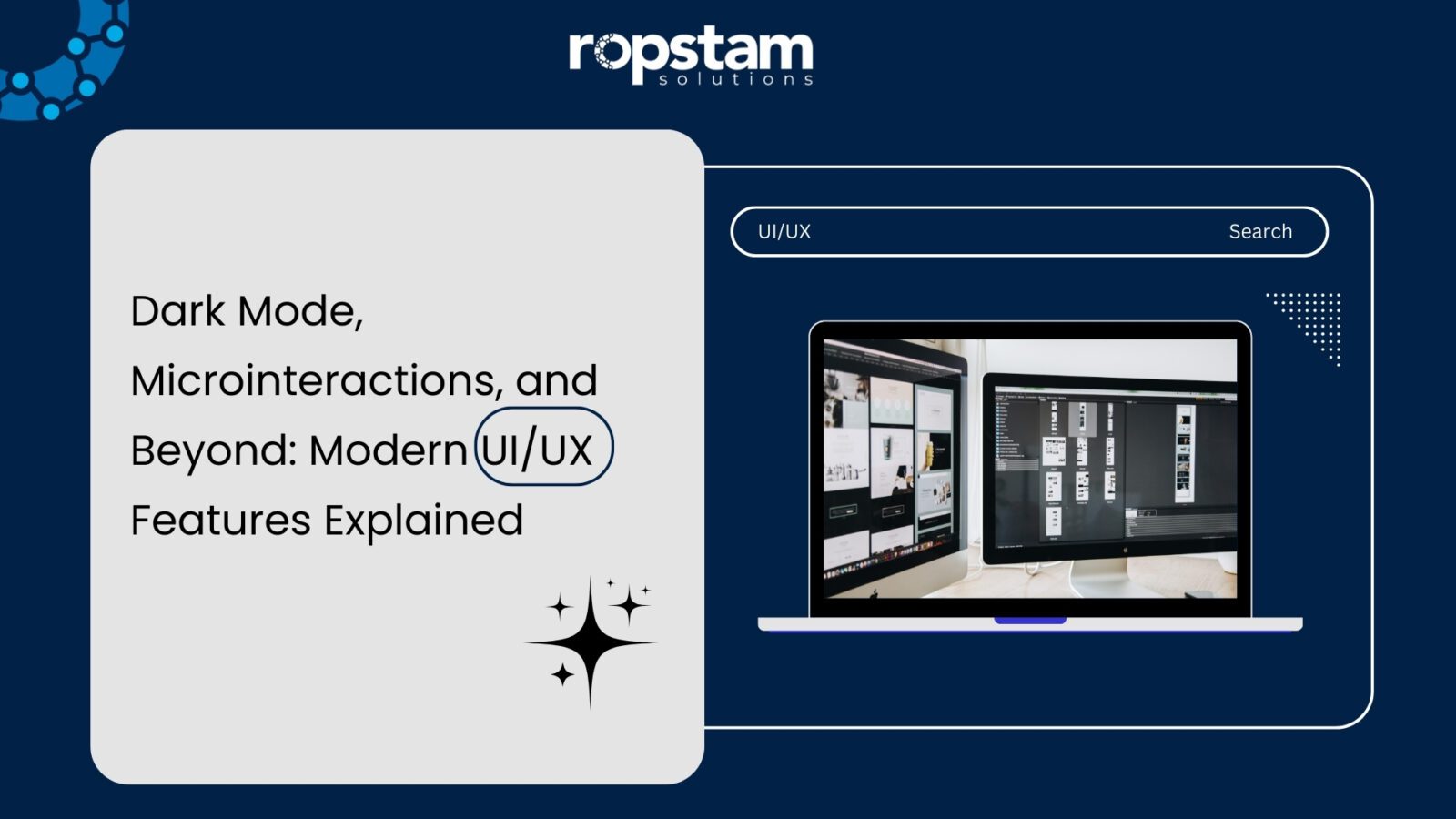
In today’s digital-first world, design is no longer just about making products look good—it’s about creating experiences that feel intuitive, engaging, and effortless. Whether it’s a mobile app, a website, or a custom enterprise solution, users expect design features that not only work but also delight. Two of the most talked-about trends in modern UI/UX are dark mode and microinteractions—but they are just the beginning. Modern UI/UX features go far beyond aesthetics. They shape user behavior, influence brand perception, and directly impact business outcomes. In this blog, we’ll break down key modern design features, why they matter, and how businesses can integrate them into their digital products for maximum impact.
Why Modern UI/UX Features Matter
Users today have countless options. If a product feels clunky or outdated, they won’t think twice before moving on to a competitor. According to research, 88% of online consumers are less likely to return to a website after a poor experience. That’s where modern UI/UX features step in—they don’t just make digital products beautiful, they make them usable, accessible, and sticky. From dark mode to motion design, these elements meet evolving user expectations while giving brands a competitive edge. Let’s explore the ones shaping the digital experiences of today.
Dark Mode: More Than Just a Trend
What is Dark Mode?
Dark mode flips the traditional light-on-dark design into a darker color palette. Instead of black text on white backgrounds, users interact with light text on dark surfaces.
Why Users Love It
- Reduced Eye Strain: Especially in low-light environments, dark mode is gentler on the eyes.
- Battery Efficiency: On OLED and AMOLED screens, dark pixels consume less power.
- Sleek Aesthetics: Many users prefer its modern, minimal look.
Business Perspective
Offering dark mode isn’t just about following trends—it’s about meeting user preferences. Tech giants like Apple, Google, and Microsoft have made dark mode a standard option across platforms, and users now expect it as a feature. For software products, integrating dark mode can increase user satisfaction and retention rates, making customers feel that your product is in tune with modern design practices.
Microinteractions: Small Details, Big Impact
What Are Microinteractions?
Microinteractions are subtle animations or responses that occur when a user takes an action. Think of the little heart that pulses when you “like” a post on social media, or the swipe animation when unlocking your phone.
Why They Matter
- Feedback & Clarity: They reassure users that their action was successful.
- Delight Factor: Small animations add personality to otherwise routine tasks.
- Guidance: Microinteractions can guide users through complex actions, reducing confusion.
Business Value
Microinteractions enhance usability and emotional connection. Users may not consciously notice them, but they feel them—and this emotional resonance keeps users engaged and more likely to recommend your product.
Personalization: Designing for the Individual
Today’s users expect experiences tailored to their needs. Personalized UI/UX adapts content, layouts, and even color schemes based on user behavior, demographics, or location.
Examples: Spotify’s personalized playlists, Netflix’s movie recommendations, or an e-commerce site showing recently browsed items.
Business Benefit: Personalized experiences lead to higher engagement, longer session times, and stronger customer loyalty.
Motion Design: Making Interfaces Come Alive
Motion design introduces animations, transitions, and dynamic visuals that guide users through a product.
- Purposeful Transitions: Instead of abrupt screen changes, animations create smoother navigation.
- Visual Hierarchy: Motion can highlight necessary actions, such as checkout buttons.
- Brand Identity: A unique animation style can make your product instantly recognizable.
Motion design should enhance usability, not distract. Overusing animations can slow down performance and frustrate users.
Accessibility Designing for Everyone
Modern UI/UX isn’t just about innovation—it’s about inclusivity. Accessibility ensures your product works for people with disabilities, from visual impairments to mobility challenges.
Features That Matter:
- Voice-enabled navigation
- Screen reader compatibility
- High-contrast modes
- Keyboard-friendly controls
Why Businesses Should Care: Beyond compliance, accessibility expands your reach and builds brand reputation. Companies that prioritize inclusivity often outperform competitors in customer satisfaction.
Minimalism and Clean Design
Modern design often embraces the principle of “less is more.” Instead of cluttered interfaces, minimalism focuses on clarity and ease.
Key Features:
- Simplified layouts
- Generous white space
- Clear call-to-actions
Result: A product that feels effortless to navigate and puts the user’s needs first
Beyond Features: The Future of UI/UX
While dark mode and microinteractions dominate the conversation today, the next wave of UI/UX is already on the horizon:
- AI-Powered Interfaces: Predicting user needs before they act.
- Voice and Gesture Navigation: Moving beyond clicks and taps.
- Augmented Reality (AR): Blending digital experiences with the physical world.
For businesses, staying ahead of these trends ensures your software solutions remain relevant and competitive.
How Businesses Can Implement These Features
Modern UI/UX features are powerful, but their effectiveness depends on how thoughtfully they are integrated into a product. Businesses should follow a structured, user-focused approach to ensure these elements deliver real value rather than becoming superficial add-ons.
- User Research: Understand what your target audience values most
Every great design starts with empathy. Conducting user research—through surveys, interviews, or analytics—helps uncover what users actually need and prefer. For instance, while some audiences may value dark mode for comfort, others may prioritize accessibility or performance. By identifying user pain points and expectations, businesses can focus resources on features that will have the most tremendous impact. - Prioritize Features: Not every product needs every trend
While dark mode or microinteractions can enhance usability, not all features make sense for every product. A financial dashboard may require high-contrast accessibility options, while an entertainment app may benefit more from motion design and personalization. Businesses should assess the relevance of each feature against their user base and core product goals, ensuring that design decisions serve purpose rather than trend-following. - Prototype and Test: Validate before full-scale implementation
Prototypes and wireframes allow businesses to experiment with features before committing to full development. Usability testing with real users ensures that design choices align with expectations. This step helps reduce costly rework and ensures that modern features like microinteractions or motion design genuinely improve the experience rather than creating distractions. - Iterate Continuously: UI/UX is not a one-time task
User needs and digital trends evolve quickly. A design that feels modern today can become outdated in a year. By continuously gathering feedback, monitoring analytics, and updating features, businesses can maintain relevance and keep their products aligned with user expectations.
Conclusion
Modern UI/UX features such as dark mode, microinteractions, personalization, accessibility, and motion design are no longer optional—they are critical to delivering seamless and engaging digital experiences. These features go beyond aesthetics; they influence how users perceive your product, how long they stay engaged, and whether they return. In a competitive digital landscape, even the most minor details—a smooth transition, a tailored recommendation, or a visually comfortable interface—can make the most significant difference in user satisfaction.
For businesses, prioritizing UI/UX is not just about keeping up with design trends, but about building long-term customer trust and loyalty. A product that feels intuitive, inclusive, and modern reflects positively on your brand and sets you apart in the market. By adopting a user-first approach, companies can reduce friction, boost conversions, and create experiences that resonate with their target audience.