The Next Screen May Not Be a Screen at All
Technology has always been about changing how we interact with the world around us. From the invention of the personal computer to the smartphone revolution, each era of digital innovation has reshaped communication, work, and everyday life. But with smartphones reaching their peak in design and capability, the next big question is: what comes after the screen in our hands?
For years, industry leaders have pointed to augmented reality (AR) as the logical next step. Imagine walking down a street where directions appear effortlessly in your field of vision, or attending a meeting where live subtitles appear in real-time without needing to glance at your phone. These visions have been part of the tech imagination for over a decade, with early attempts, such as Google Glass, sparking excitement but ultimately failing to resonate with everyday users.
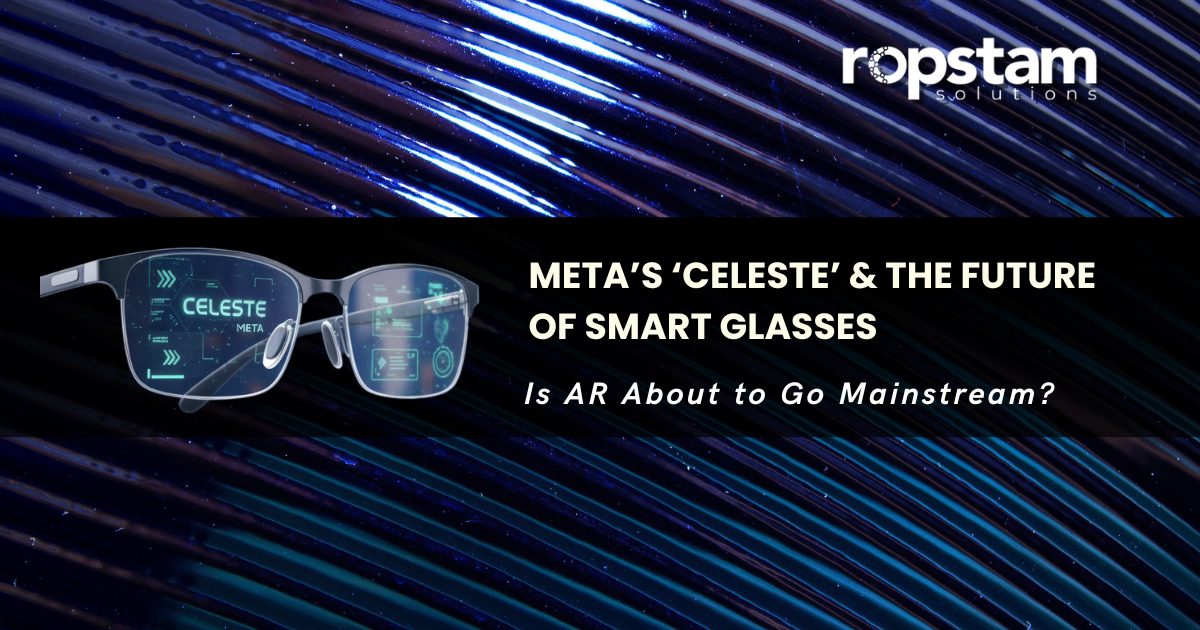
In 2025, Meta may be rewriting that story. The company has unveiled Celeste, a new generation of smart glasses that merges wearable fashion with advanced computing power. Unlike earlier prototypes that felt bulky, experimental, or impractical, Celeste introduces a polished design, built-in display, and AI-driven features that make the device feel less like science fiction and more like an everyday tool. But the launch of Celeste isn’t just about a shiny gadget. It signals a turning point in how people may live, work, and communicate in the years to come. With AI integration, 5G-Advanced networks, and a culture already accustomed to AR through filters, gaming, and mobile apps, the ecosystem appears to be finally ready.
The real question is: are smart glasses finally about to go mainstream? For software developers, businesses, and innovators, understanding the potential of Celeste is about more than curiosity — it’s about preparing for the next wave of digital transformation.
What Sets Meta’s Celeste Apart?
Meta’s Celeste is more than just a pair of glasses with a camera. It represents the company’s ambition to merge everyday wearables with the computing power of AI and AR. Key highlights include:
- Built-in Micro Display: Unlike earlier models, Celeste integrates a micro display that projects contextual information directly into the user’s line of sight—no need to glance at a phone.
- AI-Powered Assistance: Users can ask questions, translate languages in real-time, or receive step-by-step instructions while keeping their hands free.
- Voice and Gesture Interaction: Celeste introduces multimodal input, combining voice, gesture, and touch controls for smoother user interaction.
- Premium Hardware: Lightweight design, stylish frames, and upgraded battery efficiency address the usability gaps that plagued earlier smart glasses.
The blend of design and function suggests Meta learned from the missteps of Google Glass and the limitations of earlier AR headsets.
Why Now? Timing Matters in Tech Adoption
The timing of Celeste’s release is as important as the device itself. Three factors make 2025 different from a decade ago:
- Mature Ecosystem: AR is no longer an experimental corner of the tech industry. From AR filters on social media to AR navigation in Google Maps, consumers are already familiar with the concept.
- AI Integration: The rapid rise of generative and agentic AI has transformed user expectations. Smart glasses today are not just about overlaying visuals but delivering intelligent, context-aware support.
- Connectivity Upgrades: With the rollout of 5G-Advanced, smart glasses can access low-latency cloud processing, enabling smoother AR experiences.
These shifts mean Celeste is entering a market where the infrastructure, culture, and technology are finally aligned.
AR Beyond Entertainment: Real-World Use Cases
While AR is often framed as a futuristic entertainment tool, its practical applications are far broader. With devices like Celeste, here’s how AR could embed itself into daily workflows:
Workplace Productivity
- Hands-free collaboration in design, architecture, and engineering.
- Real-time translation and transcription in global business meetings.
- Contextual reminders and project dashboards in knowledge work.
Healthcare & Training
- Surgeons could access patient data during procedures.
- Trainees can learn with live step-by-step AR guidance.
- Remote specialists can support local teams in real time.
Retail & Customer Experience
- Personalized product recommendations while shopping.
- AR-driven try-on experiences for fashion and eyewear.
- In-store navigation and instant checkout.
Everyday Convenience
- Turn-by-turn walking navigation without needing to check your phone.
- Real-time language subtitles during conversations.
- Voice-assisted task management is visible in the glasses.
For businesses, these use cases highlight opportunities to develop AR-enabled applications that serve both enterprise and consumer needs.
The Challenges That Remain
Despite the excitement, mainstream adoption isn’t guaranteed. Celeste still faces hurdles that any AR device must overcome:
- Privacy Concerns: Cameras on glasses often raise questions about surveillance and consent.
- Battery Life: Balancing lightweight design with high performance remains a hardware challenge.
- User Comfort: Glasses must be stylish and comfortable enough for daily wear — a high bar to meet.
- Content Ecosystem: Without compelling applications, even the best hardware can fail to gain traction.
These challenges highlight why software development is just as critical as hardware innovation in the AR space.
What This Means for Developers and Businesses
For software development agencies, the arrival of Celeste opens exciting new frontiers:
AR Application Development
Businesses will need custom AR solutions — from retail experiences to productivity tools. Agencies that can build cross-platform, AR-first applications will have a competitive edge.
AI + AR Integration
With Celeste powered by AI, opportunities lie in blending contextual intelligence with immersive visuals. For example, a healthcare app could combine AI diagnostics with AR overlays to assist doctors.
Enterprise Adoption Strategies
Organizations exploring AR will need partners to guide digital transformation. Agencies can help assess use cases, prototype solutions, and integrate AR into existing systems.
UX & Accessibility
Designing for smart glasses requires new UX thinking, including lightweight interfaces, voice-first navigation, and minimal distractions. Developers will need to reimagine user flows for heads-up experiences.
Will AR Finally Go Mainstream in 2025?
The big question remains: is Meta’s Celeste the tipping point for AR adoption?
The answer may be: it depends on the ecosystem. Celeste itself is impressive, but mass adoption will hinge on:
- Developer Engagement: The more apps built for Celeste, the more value it offers.
- Business Investment: Industries such as retail, logistics, and healthcare that adopt AR will accelerate mainstream visibility.
- Consumer Comfort: If the glasses can feel as natural as wearing a watch, adoption could rise quickly.
What makes Celeste different is its timing. Unlike Google Glass, it isn’t launching into an unprepared world. Instead, it’s arriving when AI, connectivity, and cultural readiness are converging.
Conclusion: A Call to Innovators
Meta’s Celeste is not just another piece of wearable tech; it’s a signal flare for the industry. After years of experimentation, smart glasses are inching closer to mainstream adoption. The combination of AI-powered assistance, lightweight design, and practical use cases sets Celeste apart from its predecessors. But the hardware alone will not determine its success.
The fundamental drivers will be the ecosystem that grows around it — the developers who build seamless AR applications, the businesses that adopt smart glasses into their operations, and the consumers who are willing to embrace a new way of engaging with technology. If Celeste can achieve this balance, it could mark the beginning of a cultural shift similar to the one brought by smartphones in the late 2000s.
For consumers, AR glasses like Celeste could mean more than convenience — they could redefine how we connect, shop, work, and even navigate our world. For businesses, it represents an untapped frontier of customer engagement and operational efficiency. For software development agencies, it’s a unique opportunity to lead innovation by designing experiences that will make AR indispensable.
While 2025 may not yet crown AR as fully mainstream, it may well be remembered as the year momentum shifted. The stage is set, the technology is ready, and the opportunities are immense. The question is no longer if smart glasses will change the way we live, but when — and with Celeste, that “when” might be closer than ever.