In today’s fast-moving business world, companies want smart tools that save time and grow revenue. That is where the difference between AI ML and DL becomes important. The terms artificial intelligence vs machine learning vs deep learning are often used together, but they are not the same. Choosing the right path can help you build apps that work better, cost less, and scale faster. As a mobile app development company, we help businesses use these technologies to solve real problems. If you want to start your project, visit this link to start your project.
WordPress also plays a strong role in modern business growth. Many companies use WordPress to launch websites quickly, manage content, and connect with customers. When combined with AI features like smart search, chatbots, or product recommendations, WordPress becomes a powerful platform for growth. In this guide, we explain AI vs ML vs DL explained in simple words. We also share machine learning vs deep learning examples, deep learning applications, and AI ML DL comparison so you can choose the best option for your business.

Business owner planning WordPress website strategy with laptop and notes
What is Artificial Intelligence?
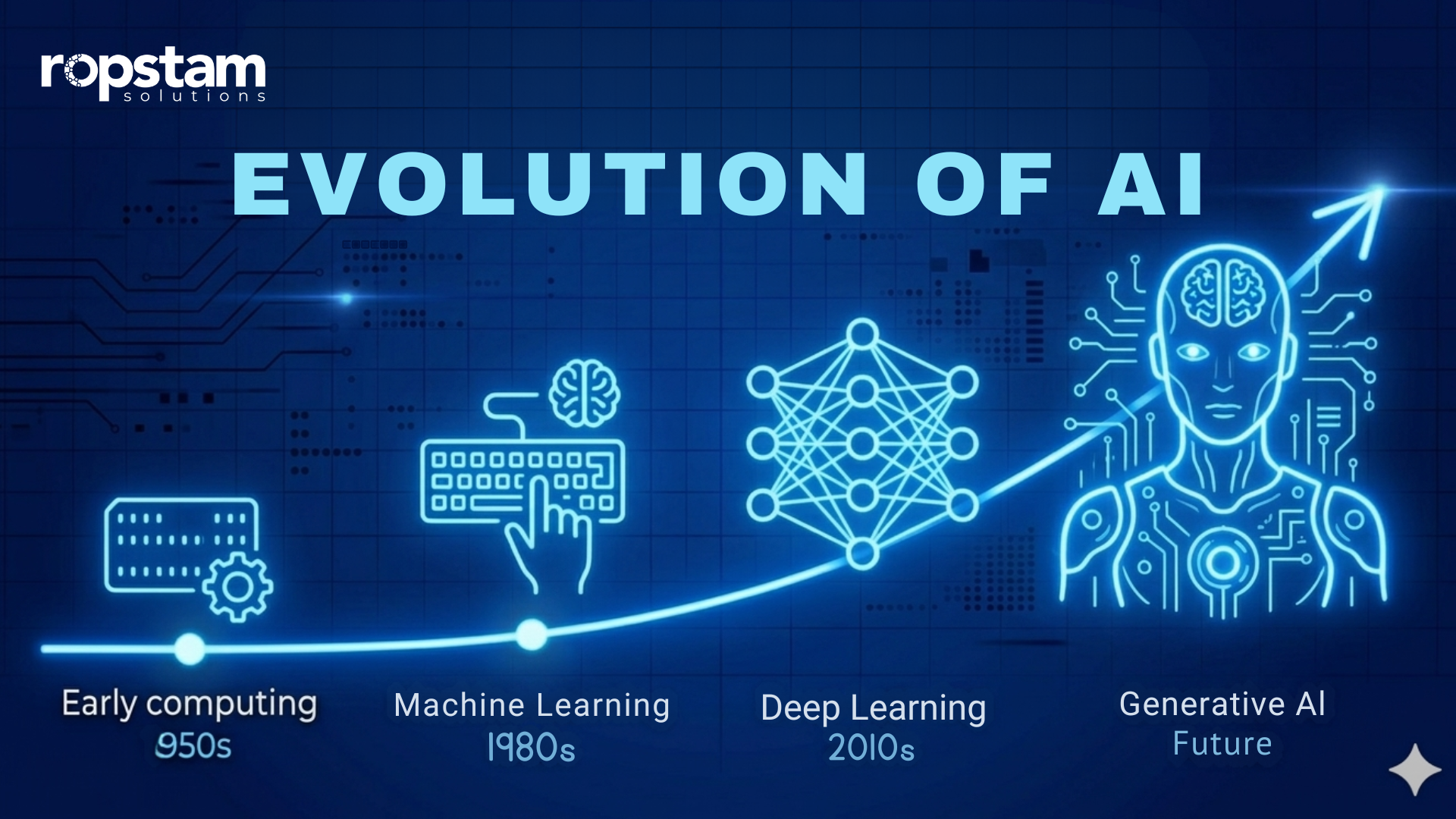
What is artificial intelligence? Artificial intelligence (AI) is a broad area of computer science. It focuses on building systems that can do tasks that usually need human thinking. These tasks include understanding language, seeing images, making decisions, and learning from experience.
AI helps businesses by automating routine work and improving customer service. For example, AI can power chat support, fraud detection, and smart scheduling. AI is the big umbrella, and machine learning and deep learning are parts of it.
Difference Between AI, ML, and DL (Simple Overview)
The difference between AI ML and DL is easy to remember with a simple structure.
- Artificial Intelligence (AI): Any system that shows human-like thinking.
- Machine Learning (ML): A part of AI where systems learn from data instead of being told every rule.
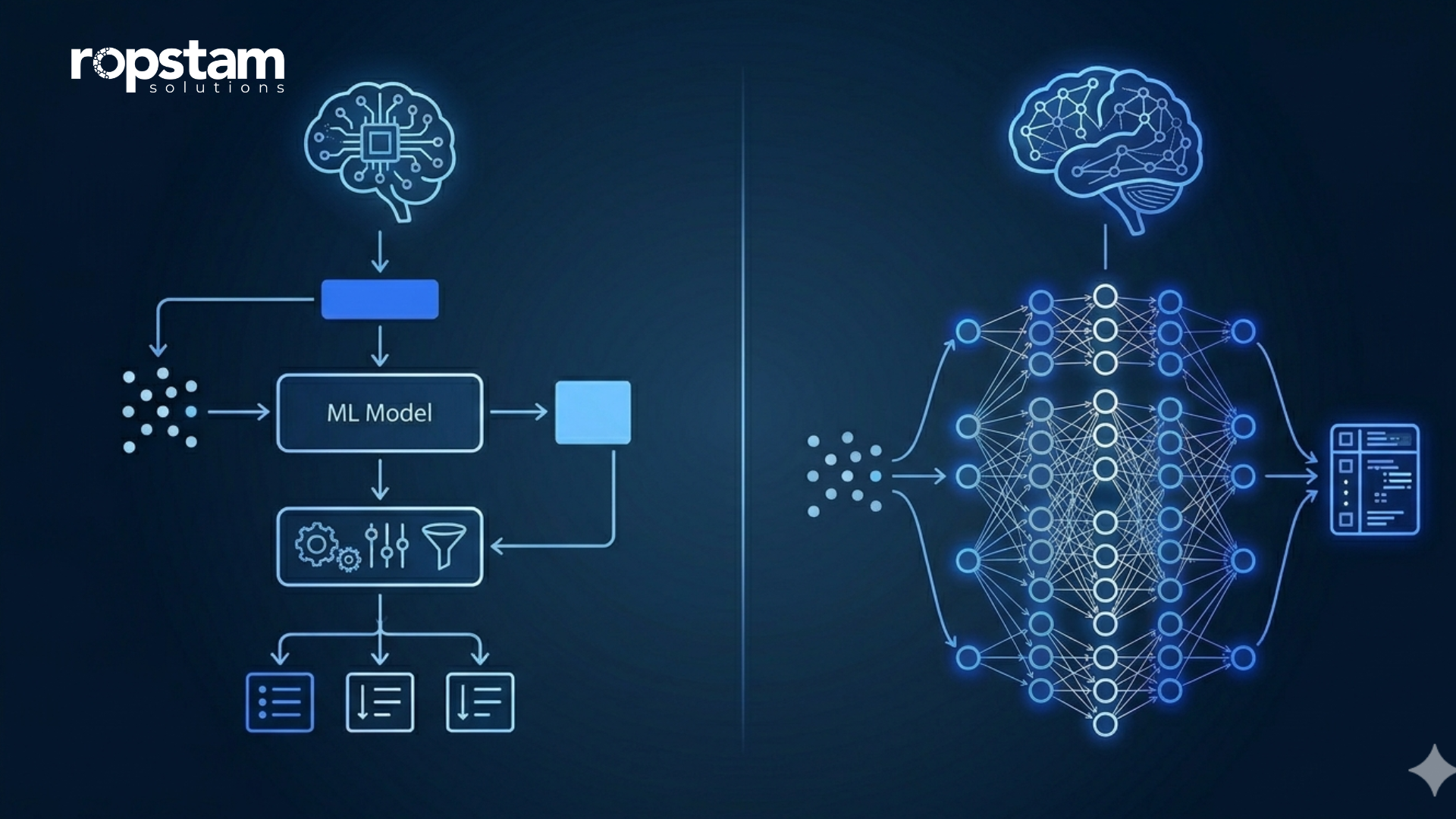
- Deep Learning (DL): A part of ML that uses many layers of connected models to learn complex patterns.
In short: AI vs ML vs DL explained means AI is the goal, ML is one way to reach it, and DL is a powerful type of ML.
How AI, ML, and DL Work
Understanding how AI ML and DL work helps you choose the right tool for your app.
- AI systems follow rules, logic, or learned patterns to make choices.
- ML systems learn from examples. They find patterns in past data and use them to predict future outcomes.
- DL systems use layered models called neural networks. These layers learn step by step, from simple patterns to complex ones.
This is why DL often needs more data and more computing power than ML.
Types of Machine Learning
When planning an app, it helps to know the types of machine learning. Each type fits different business goals.
- Supervised Learning: The system learns from labeled examples. For example, it learns to detect spam emails.
- Unsupervised Learning: The system finds patterns in unlabeled data. For example, it groups customers by buying habits.
- Reinforcement Learning: The system learns by trial and error. For example, it improves a game AI or delivery route planning.
These methods are the foundation of many real-world AI vs ML vs DL use cases.
Machine Learning vs Deep Learning Examples
Let’s look at machine learning vs deep learning examples to make things clear.
Machine Learning examples:
- Predicting sales based on past trends
- Credit scoring using customer history
- Email spam detection with simple feature rules
Deep Learning examples:
- Face recognition in a mobile app
- Voice assistants that understand speech
- Image search that finds products from photos
These examples show why DL is strong for tasks with images, audio, or large text data.
Deep Learning Applications in Real Business
Deep learning applications are growing fast across industries. Here are some common business uses:
- Healthcare: Reading medical images and supporting diagnosis
- Retail: Product recommendations and visual search
- Finance: Fraud detection and risk analysis
- Manufacturing: Quality checks using camera systems
- Customer support: Smart chatbots that understand natural language
Deep learning often delivers high accuracy when you have lots of data and clear goals.
AI vs ML vs DL Use Cases (Practical Choices)
Choosing between AI vs ML vs DL use cases depends on your app goals, budget, and data.
- Use AI when: You need basic automation, rule-based decisions, or simple chat support.
- Use ML when: You have structured data and want predictions, like sales forecasting or churn risk.
- Use DL when: You work with images, voice, or large text, and need high accuracy.
A good approach is to start with ML first. Then move to DL if ML is not accurate enough.
AI ML DL Comparison (When Each Works Best)
Here is a clear AI ML DL comparison to guide your decision.
| Area | AI | Machine Learning | Deep Learning |
| Best for | General automation | Prediction from data | Complex patterns (images, voice, text) |
| Data needs | Low to medium | Medium | High |
| Cost | Lower | Medium | Higher |
| Speed to build | Faster | Medium | Slower |
| Accuracy | Good | Better | Best (in many cases) |
This table helps you see which option fits your business needs.
WordPress Development Cost for Businesses
Many companies pair AI features with WordPress websites. Below is a clear WordPress Development Cost for Businesses table to help you plan.
| Project Type | Estimated Cost | Best For |
| Basic business website | $2k – $8k | Small business launch |
| Custom corporate website | $8k – $25k | Brand-focused sites |
| eCommerce WordPress store | $15k – $60k | Selling products online |
| Enterprise WordPress platform | $60k – $250k+ | High traffic and custom workflows |
If you want advanced AI features like smart search or chatbots, costs may rise based on data and integrations.
AI Development Cost Overview (For Mobile Apps)
Here is a pricing table for AI-related development. This helps you budget for mobile apps and smart features.
| AI Development Type | Estimated Cost |
| AI Chatbot | $10k – $50k |
| AI SaaS | $50k – $200k |
| Enterprise AI | $100k+ |
These costs depend on data quality, app complexity, and how much training or customization is needed.
Feature and Business Benefit (Why This Matters)
This table shows how key features connect to real business benefits.
| Feature | Business Benefit |
| SEO-friendly structure | Higher search visibility and more leads |
| Mobile responsive design | Better user experience and higher conversions |
| Plugin support | Faster feature rollout without heavy coding |
| Custom integrations | Connect CRM, payments, and AI tools smoothly |
| Scalable hosting setup | Handle more users as your business grows |
Why WordPress Matters for Modern Businesses
WordPress is one of the most popular platforms for business websites. It is flexible, easy to manage, and strong for SEO. Many companies choose WordPress because it supports fast launches and long-term growth.
Benefits of AI automation include:
- reduced operational costs
- faster workflows
- improved accuracy
- better customer support
- stronger data-driven decisions
When you combine WordPress with AI features, you get a website that not only looks good but also works smart.
To see real results, you can explore this business transformation in cloud9 case study:
What is WordPress Website Development for Business?
What is WordPress website development for business? It is the process of building a professional website using WordPress. It includes design, setup, plugin configuration, SEO, security, and custom features. The goal is to attract customers, share services, and support sales.
How to Build a Business Website on WordPress
Building a business website on WordPress is simple when you follow clear steps.
- Set goals: Define what you want (leads, sales, bookings).
- Choose hosting: Pick a fast, secure hosting provider.
- Pick a theme: Choose a clean, mobile-friendly design.
- Add key pages: Home, About, Services, Contact, Blog.
- Install plugins: Add SEO, forms, analytics, and security tools.
- Optimize content: Use clear titles, simple language, and strong calls to action.
- Test and launch: Check speed, mobile view, and links before going live.
WordPress website design and development process from wireframe to live site
WordPress Website Design Tips for Better Conversions
Good design helps people take action.
- Keep layouts simple and easy to scan.
- Use clear headlines and short paragraphs.
- Add strong CTA buttons like “Get a Quote” or “Start Now.”
- Make contact forms short and visible.
- Use real images and customer-focused text.
Best WordPress Plugins for Business Websites
Plugins help you add features without custom coding.
- SEO: Yoast SEO or Rank Math
- Security: Wordfence or Sucuri
- Performance: WP Rocket or W3 Total Cache
- Forms: Contact Form 7 or Gravity Forms
- Analytics: Google Site Kit
Choose plugins that match your goals and keep your site fast.
WordPress SEO Optimization Guide for Business Owners
SEO helps your site show up in search results.
- Use one main keyword per page and related keywords naturally.
- Write clear meta titles and meta descriptions.
- Use short paragraphs and helpful headings.
- Add internal links to guide visitors.
- Optimize images with small file sizes and alt text.
For trusted guidance, you can also check resources from OpenAI and arena.ai.
A great example of these principles in action is our work with Tibor. We applied focused keyword strategies, improved site speed, optimized content structure, and built a strong internal linking system. As a result, their organic traffic grew more than 340% in under seven months, and they now rank on page one for several competitive business terms. Review this SEO success story here: Tibor Case Study.

SEO and performance optimization dashboard with speed scores and analytics
WordPress Performance Optimization for Speed and Growth
Fast websites keep visitors longer and improve conversions.
- Use caching plugins and a content delivery network (CDN).
- Compress images and limit heavy scripts.
- Choose a reliable hosting plan that scales.
- Remove unused plugins and themes.
- Test speed regularly with tools like Page Speed Insights.
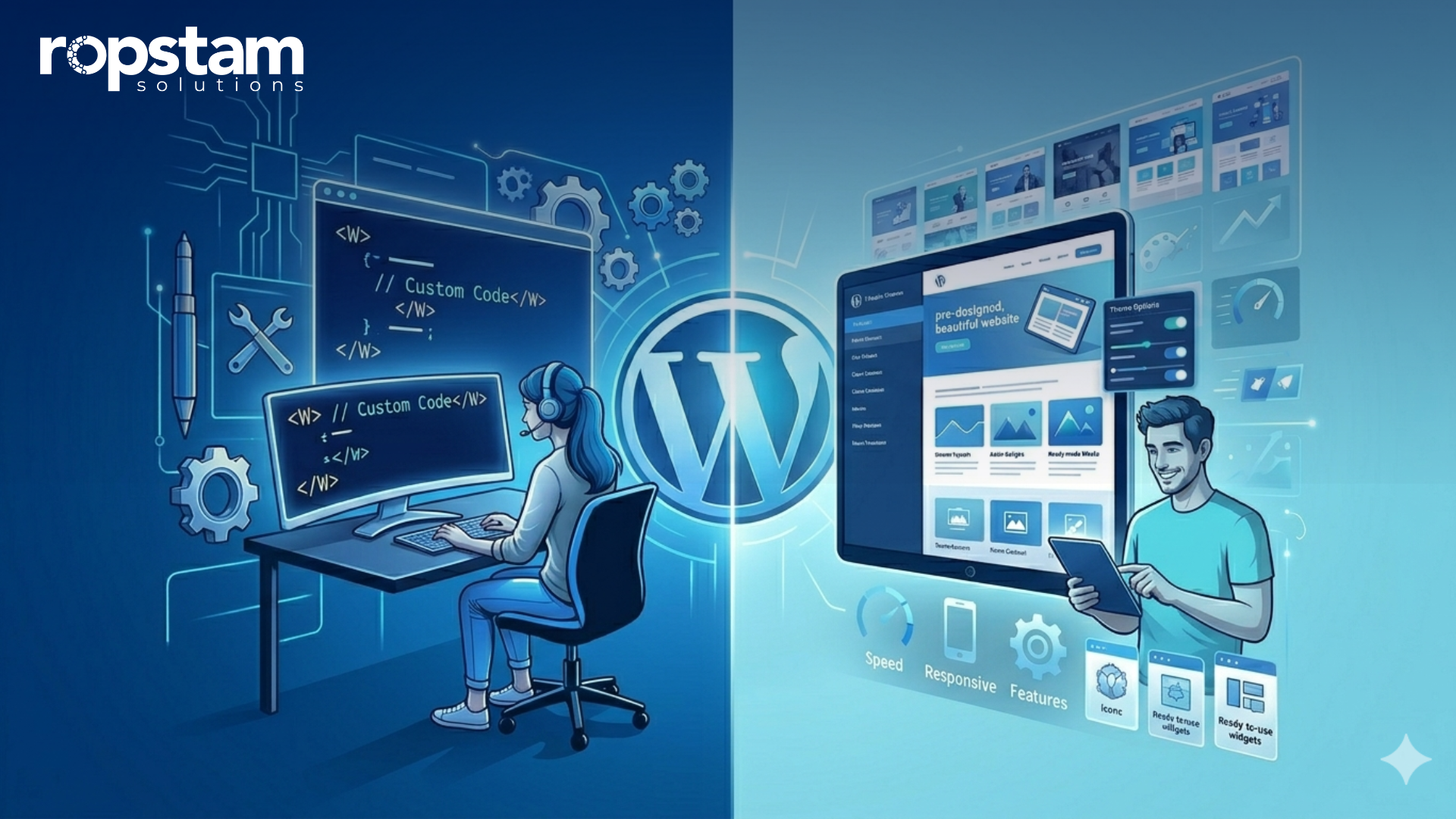
When to Choose Custom WordPress Development Services
Custom WordPress development services make sense when:
- You need special workflows or integrations
- You want unique design beyond standard themes
- You need advanced AI features in your website or app
- You expect high traffic and need strong scalability
Custom builds cost more but often save time and money long term.
Scalable WordPress Solutions for Businesses
Scalable solutions help your business grow without rebuilding everything.
- Use modular design so new features are easy to add.
- Plan for higher traffic with strong hosting and caching.
- Build integrations that connect your site to CRM, email, and payments.
- Add AI features step by step, starting with small wins.

Scalable business website growth shown across devices with analytics graph
See how we applied these principles in our CIU case study, where a modular WordPress architecture handled surging traffic, seamless CRM/payment integrations, and phased AI rollouts. This enabled CIU to scale effortlessly without site rebuilds, boosting performance by 300% and user engagement significantly. Real results like these prove scalable WordPress drives sustainable business growth.
Start Your WordPress Development Project
We help businesses build scalable WordPress solutions, custom builds, and business websites that support real growth. Our team works with you to choose the right mix of AI, ML, and DL for your goals. If you want to start your project, contact us here.
Conclusion
Machine Learning vs Deep Learning: Which One Is Better? The answer depends on your goals, data, and budget. AI is the big umbrella, ML is great for predictions from data, and DL is best for complex tasks like images, voice, and large text. For most businesses, starting with ML is smart, then adding DL when you need higher accuracy and have enough data. Combined with a strong WordPress website, these tools can drive real growth. This page is going to tell you, how to start your business.