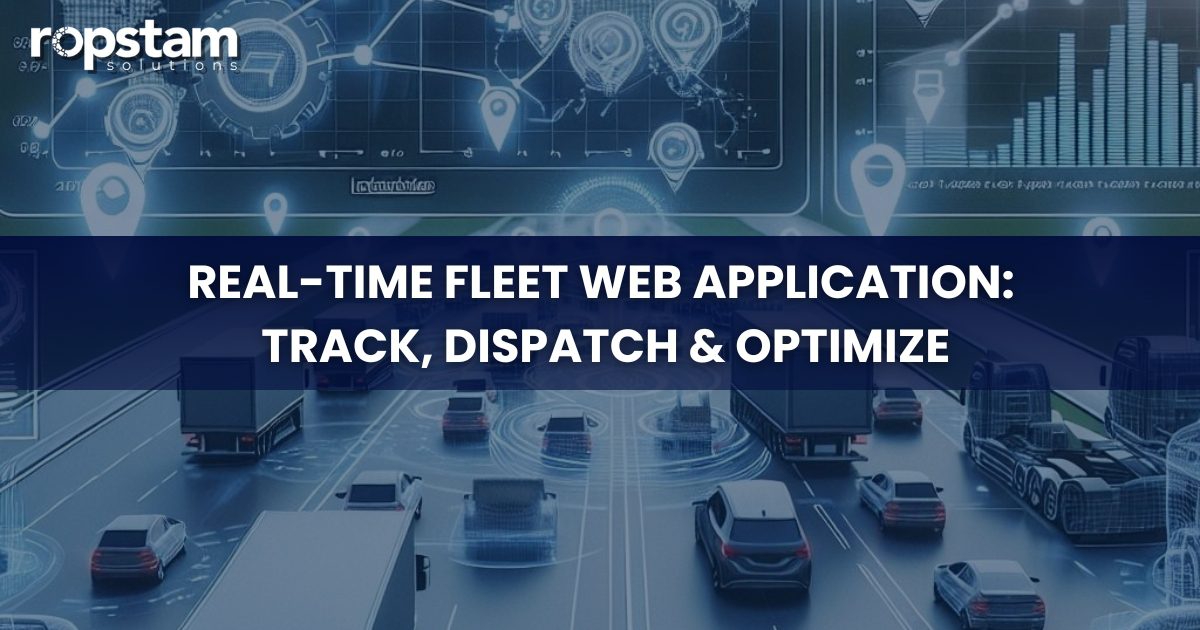
Real-Time Fleet Web Application: Track, Dispatch & Optimize

954 Views

Imagine having full visibility of your vehicles—every mile logged, every job dispatched, and every driver connected—in real time. Modern real-time fleet web applications make this possible. These tools aren’t just for logistics giants anymore; any business with vehicles or mobile teams can use them. Whether it’s delivery services, field maintenance, or construction, having real-time tracking and management transforms operations.

For a software development agency, building a real-time fleet web application is more than writing software—it’s enabling smarter dispatch, better coordination, and data-driven decisions. This blog will explain what makes a strong fleet application, the key features, architecture, security, performance, and how agencies can help clients improve field operations.
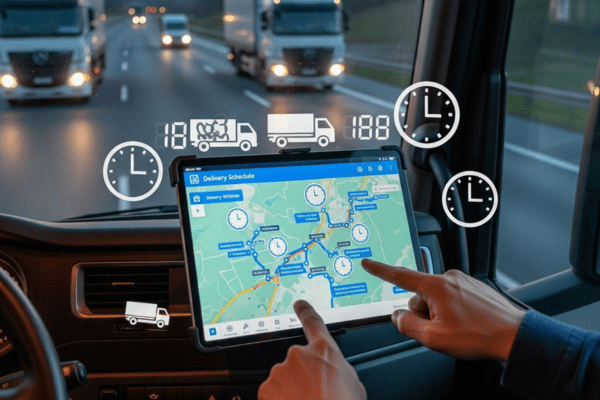
Real time fleet web applications

What Is a Real-Time Fleet Web Application?

A real-time fleet web application is an online platform (web or hybrid mobile/web) that gives businesses live insight into their field operations. It allows:

  • GPS tracking of vehicles and assets
  • Dispatching tasks to drivers or field staff
  • Driver and vehicle management (profiles, status, availability)
  • Real-time communication between field teams and dispatchers
  • Tracking tasks from assignment to completion
  • Analytics and reporting on fleet performance

With a good fleet app, organizations reduce idle time, improve on-time delivery, respond faster to issues, and provide transparency to clients or stakeholders.

Core Components of a Fleet Web Application

1. Asset & User Management

A fleet system maintains a database of vehicles/assets and users (drivers, dispatchers, managers). It tracks vehicle identifiers, driver assignments, availability, and maintenance history.

2. Real-Time GPS Tracking & Mapping

Vehicles report GPS coordinates via mobile devices or telematics. A map interface shows locations, routes, and statuses (in transit, idle, completed). The backend must handle frequent location updates, while the frontend renders maps in real time.

3. Dispatch & Workflow System

Dispatchers assign jobs quickly, see vehicle availability, and send tasks. Drivers use mobile interfaces to accept tasks, update status, and mark completion. Workflow states—assigned, en route, arrived, complete—are visible across roles.

4. Communication & Notifications

Real-time chat, push notifications, and alerts for exceptions (breakdowns, delays) keep field teams connected.

5. Analytics & Dashboarding

Metrics like vehicle utilization, trip duration, idle times, and completion rates help managers spot trends, optimize routes, and make strategic decisions.

6. Integrations & Scalability

The system should integrate with maintenance, fuel tracking, billing, customer portals, or third-party telematics. Architecture must handle more vehicles, data, and users as the business grows.

Security & Performance Considerations

  • Secure Data Transmission: Use HTTPS/TLS for GPS and status updates.
  • Role-Based Access Control (RBAC): Drivers, dispatchers, and managers see only what their role allows.
  • Data at Rest Protection: Encrypt logs, driver data, and location history.
  • Real-Time Data Handling: Backend must support frequent updates with low latency.
  • Scalability & Failover: Handle spikes in data or traffic gracefully.
  • Audit Trails & Monitoring: Track who changed what and when for compliance.
  • User Experience: Mobile apps must work offline and sync efficiently when connectivity returns.

Advanced Features to Enhance Fleet Applications

  • Geo-Fencing & Route Optimization: Alerts for vehicles leaving zones; smart route suggestions.
  • Predictive Maintenance: Monitor vehicle health and trigger maintenance alerts.
  • Client Visibility: Give customers live tracking and ETA updates.
  • Mobile Document Capture: Upload proof of delivery, inspect vehicles, or capture job completion data.
  • Machine-Learning Analytics: Predict delays, optimize dispatch, analyze driver behavior.
  • Multi-Platform & Offline Mode: Ensure web and mobile apps work in low connectivity.

Case Study Reference

A real-world example is Phantom Disposal, where a fleet platform was built with live GPS tracking, dispatch, driver/dispatcher modules, and in-app chat. This solution reduced manual tracking, improved field visibility, and streamlined operations. 

real-time fleet web application

real-time fleet web application

Conclusion

A real-time fleet web application is more than maps and job assignments—it transforms field operations into a connected, data-driven system. Live GPS tracking, efficient dispatch, real-time communication, and analytics help organizations reduce costs, improve reliability, and make smarter decisions.

For software agencies, building such platforms is an opportunity to deliver strategic value. With robust architecture, security, scalability, and a user-friendly interface, agencies enable clients to run operations efficiently today and prepare for future growth.

FAQ’s

What is a real-time fleet web application?

It’s an online platform that tracks vehicles, assigns jobs, and monitors field operations live.

How does it help manage fleets?

It improves dispatch efficiency, reduces idle time, and provides real-time insights into operations.

Can it track drivers and vehicles in real time?

Yes, GPS tracking and status updates show live locations, routes, and job progress.

Is the data secure in a fleet web application?

Absolutely. It uses encryption, role-based access, and secure storage for sensitive data.

What advanced features can a fleet app have?

Features include route optimization, predictive maintenance, client tracking, and offline mobile support.

Recent Posts

Which LLM is Better for Customer Support Automation? 

Customer support is often the first place where customers feel your brand. It is also where costs rise fast. With the best LLM for customer support automation, you can answer common questions 24/7, reduce ticket load, and keep quality steady as you grow. This matters even more when your main business hub is WordPress. WordPress […]

AI-Driven Software Solutions
Why Smart Enterprises Are Investing in AI-Driven Software Solutions

Introduction In today’s fast-changing digital world, enterprises are under constant pressure to improve speed, accuracy, and decision-making. This is where AI-driven software solutions are becoming a game-changer. Businesses are no longer relying only on traditional systems. Instead, they are shifting toward intelligent tools that learn, adapt, and improve over time. Modern organizations are using AI […]

Why WordPress Powers 40% of Websites: A Simple Guide for Beginners

Why WordPress powers 40% of websites is a question many business owners ask when they plan a new site, store, or landing page. The short answer is simple: WordPress helps you launch faster, market better, and grow without locking you into one vendor. It is flexible, cost-friendly, and easy to manage, even if you are […]

How Large Language Models Work?

In today’s digital world, a strong website is the heart of your business. Many companies choose WordPress because it powers over 43% of the internet. It’s popular because it’s easy to use, can grow with your business, and can be customized in endless ways. A new technology, Large Language Models, is making business websites even […]

Profile Picture

The web application development team at Ropstam Solutions is an evolving group of coders dedicated to building powerful and scalable web applications. Our award-winning team combines technical proficiency and years of experience with creative problem-solving to deliver top-tier content in the realm of web application development.

Ropstam Web App Development Team

Related Posts

flutter app development best practices

Flutter App Development Best Practices to Follow in 2024

With the advancements in digital technology, mobile app development has become one of the top fields to pursue. In the domain of cross-platform mobile app development, Flutter is unarguably the next...
Meta Launches the Next Generation of Llama

Meta Launches the Next Generation of Llama

Mack Zuckerberg-owned Meta has launched the second iteration of the open-source version of its AI model named Llama. AI experts and enthusiasts can leverage this publicly accessible Large Language...
application modernization trends

10 Application Modernization Trends To Watch in 2024

In the ever-evolving digital landscape, understanding application modernization trends is crucial to keeping in touch with customer demands. As technology evolves at a neck-breaking pace, businesses...

10 Best Practices for a Successful QA Process

In the world of software, success is no longer measured by just delivering a product—it’s measured by providing a quality product. Users today expect applications that are fast, reliable, secure,...

Why our clients
love us?

Our clients love us because we prioritize effective communication and are committed to delivering high-quality software solutions that meet the highest standards of excellence.

anton testimonial for ropstam solutions

“They met expectations with every aspect of design and development of the product, and we’ve seen an increase in downloads and monthly users.”

Anton Neugebauer, CEO, RealAdvice Agency
mike stanzyk testimonial for ropstam solutions

“Their dedication to their clients is really impressive.  Ropstam Solutions Inc. communicates effectively with the client to ensure customer satisfaction.”

Mike Stanzyk, CEO, Stanzyk LLC

“Ropstam was an excellent partner in bringing our vision to life! They managed to strike the right balance between aesthetics and functionality, ensuring that the end product was not only visually appealing but also practical and usable.”

Jackie Philbin, Director - Nutrition for Longevity

Supercharge your software development with our expert team – get in touch today!