
Introduction
Agentic AI is transforming how businesses operate, innovate, and compete in today’s digital economy. Unlike traditional AI systems that depend heavily on human input, Agentic AI can make decisions, take actions, and continuously learn from outcomes with minimal supervision. This shift is redefining automation and enabling companies to move from reactive processes to proactive, intelligent systems that adapt in real time.
For mobile app development companies and digital businesses, the rise of Agentic AI brings both strong opportunities and important challenges. It helps improve customer experiences through personalization, automates complex workflows, and boosts operational efficiency. At the same time, it raises concerns around control, transparency, ethics, and data security that businesses must address carefully.
This blog explores the rise of Agentic AI, including its opportunities, risks, and overall business impact. It also shares practical insights on how organizations can adopt this technology in a responsible and scalable way. Whether you are building mobile apps, enterprise platforms, or digital products, understanding Agentic AI is essential to stay competitive in a fast-changing market and unlock long-term growth. Ready to leverage the power of Agentic AI for your business? Partner with experts to build intelligent, scalable, and future-ready solutions tailored to your needs. Get started today: Transform your digital products with cutting-edge AI innovation and stay ahead of the competition.
1. What Is Agentic AI?
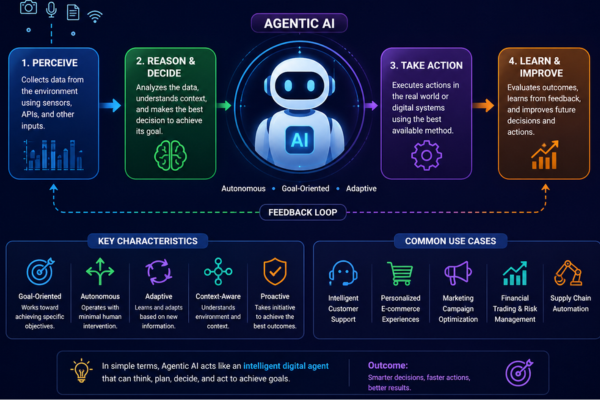
Agentic AI refers to advanced AI systems that can operate independently to achieve specific goals with minimal human input. Unlike traditional AI tools that only respond to commands, Agentic AI can analyze data, evaluate situations, make decisions, and take actions on its own. It is designed to follow objectives, learn from outcomes, and improve performance over time. This makes it highly useful for dynamic business environments where quick decisions are needed. In simple terms, Agentic AI acts like an intelligent digital agent that can think, plan, and execute tasks to achieve defined goals efficiently and continuously.
Unlike traditional automation, Agentic AI focuses on:
- Goal-oriented behavior
- Continuous learning
- Autonomous decision-making
- Real-time adaptability
Key Characteristics
Agentic AI systems are designed to:
- Operate with minimal supervision
- Adjust strategies based on outcomes
- Interact with other systems
- Solve complex problems
How It Works
At its core, Agentic AI combines machine learning, natural language processing, and decision-making frameworks. This allows it to:
- Understand context
- Evaluate multiple options
- Execute optimal actions
This makes Agentic AI a powerful tool for modern businesses seeking smarter automation. Learn more about how artificial intelligence drives measurable business success in our detailed guide on benefits of AI for business growth. This article explains how AI improves efficiency, decision-making, and customer experience, helping businesses scale faster and smarter.
2. Evolution of AI Toward Agentic Systems
From Automation to Autonomy
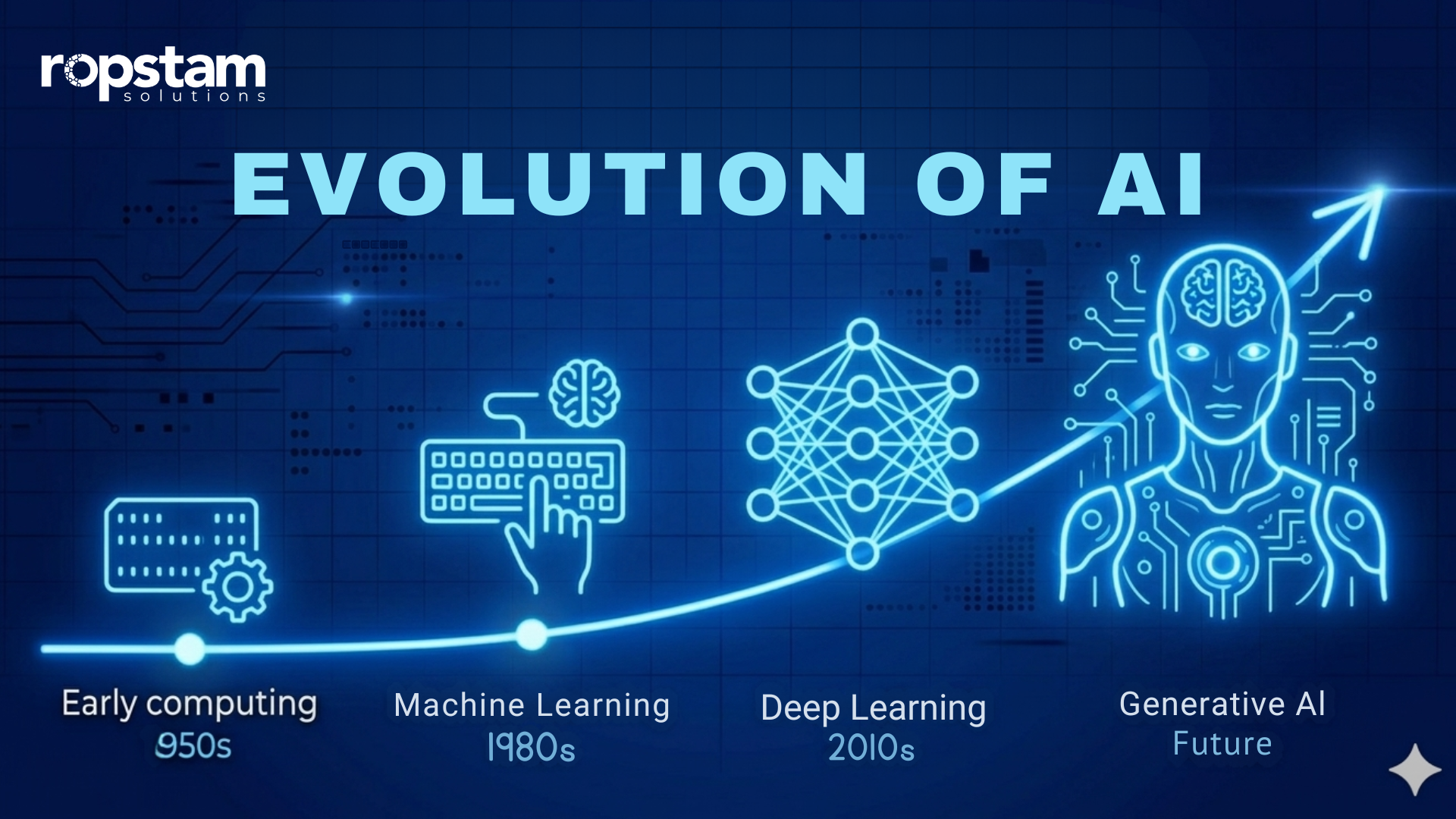
AI has evolved significantly over the years, moving from simple rule-based systems to highly intelligent and autonomous models. Early AI systems were built on fixed instructions. They could only perform tasks when specific conditions were met. These systems were useful but limited in flexibility and decision-making ability.
Over time, machine learning and data-driven models changed how AI works. Modern systems can now analyze large amounts of data, identify patterns, and improve their performance without being explicitly reprogrammed. This shift laid the foundation for more advanced intelligence.
Today, the focus has moved toward autonomy. Systems like Agentic AI can not only analyze and predict but also act independently to achieve goals. They can adjust strategies in real time and respond to changing environments. This evolution from automation to autonomy is reshaping industries by enabling faster decisions, smarter workflows, and more efficient business operations across digital ecosystems.
Stages of AI evolution:
- Rule-based systems
- Machine learning models
- Predictive analytics
- Autonomous agents (Agentic AI)
Key Drivers of Growth
The rise of Agentic AI is driven by:
- Increased data availability
- Advances in computing power
- Improved algorithms
- Demand for efficiency
Why Businesses Are Adopting It
Organizations are shifting to Agentic AI because it:
- Reduces manual effort
- Improves accuracy
- Enhances scalability
3. Opportunities of Agentic AI for Businesses
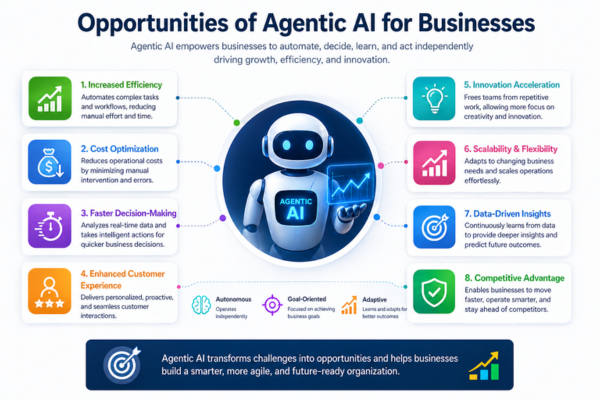
Agentic AI takes automation to a much higher level by allowing systems to act independently instead of waiting for human instructions. Traditional automation only follows predefined rules, but Agentic AI can analyze situations, make decisions, and execute actions in real time. This makes business processes more dynamic, adaptive, and efficient.
In modern digital environments, companies need speed and accuracy. Agentic AI helps meet these demands by reducing delays in decision-making and improving overall system responsiveness. It can also learn from outcomes, which means performance improves over time without constant manual updates.
Key benefits include:
- Faster decision-making through real-time data analysis
- Reduced operational costs by minimizing manual effort
- Improved productivity by automating complex workflows
- Better scalability for growing business needs
- More consistent output with fewer human errors
With Agentic AI, businesses can move beyond simple task automation and build intelligent systems that actively contribute to growth and operational efficiency.
Improved Customer Experience
Businesses can use Agentic AI to:
- Personalize user interactions
- Provide real-time support
- Predict customer needs
Innovation and Growth
Agentic AI opens new opportunities for:
- Smart mobile applications
- Intelligent workflows
- Data-driven strategies
Key Opportunities Summary
- Autonomous business processes
- Scalable operations
- Competitive advantage
- Better user engagement
4. Risks and Challenges of Agentic AI
Lack of Control
One of the biggest concerns with Agentic AI is reduced human oversight. As these systems become more autonomous, businesses may lose direct control over certain decisions. While this improves speed and efficiency, it also increases uncertainty in critical operations.
Potential risks include:
- Unintended decisions that do not align with business goals
- System errors that can scale quickly across processes
- Lack of accountability when outcomes are unclear
Because Agentic AI acts independently, it becomes essential to set strong boundaries and monitoring systems to ensure safe operations.
Data Privacy Issues
Agentic AI relies heavily on large volumes of data to make decisions and improve performance. This creates serious concerns around data protection and responsible usage.
Key risks include:
- Data misuse or unauthorized access
- Security breaches affecting sensitive information
- Compliance issues with global data regulations
Businesses must ensure strict data governance policies and secure infrastructure to protect user and company data.
Ethical Concerns
As Agentic AI systems become more advanced, ethical challenges also increase. These systems can unintentionally reflect bias or make decisions that are difficult to explain.
Important concerns include:
- Bias in automated decision-making
- Lack of transparency in AI actions
- Responsible use of AI in business processes
Organizations must ensure fairness, accountability, and transparency in all AI-driven systems.
Risk Mitigation Strategies
To safely adopt Agentic AI, businesses should implement strong control mechanisms.
Recommended strategies:
- Build clear AI governance frameworks
- Continuously monitor AI behavior and outcomes
- Maintain human oversight for critical decisions
- Conduct regular audits for security and compliance
- Use explainable AI models where possible
By following these steps, companies can reduce risks while still benefiting from the power of autonomous systems.
5. Agentic AI in Mobile App Development
Transforming Mobile Apps with Agentic AI
Agentic AI is revolutionizing mobile app development by making applications smarter, faster, and more adaptive. Instead of relying only on fixed logic, modern apps powered by Agentic AI can analyze user behavior, make decisions, and take actions in real time. This creates a more personalized and seamless experience for users while reducing manual effort for developers.
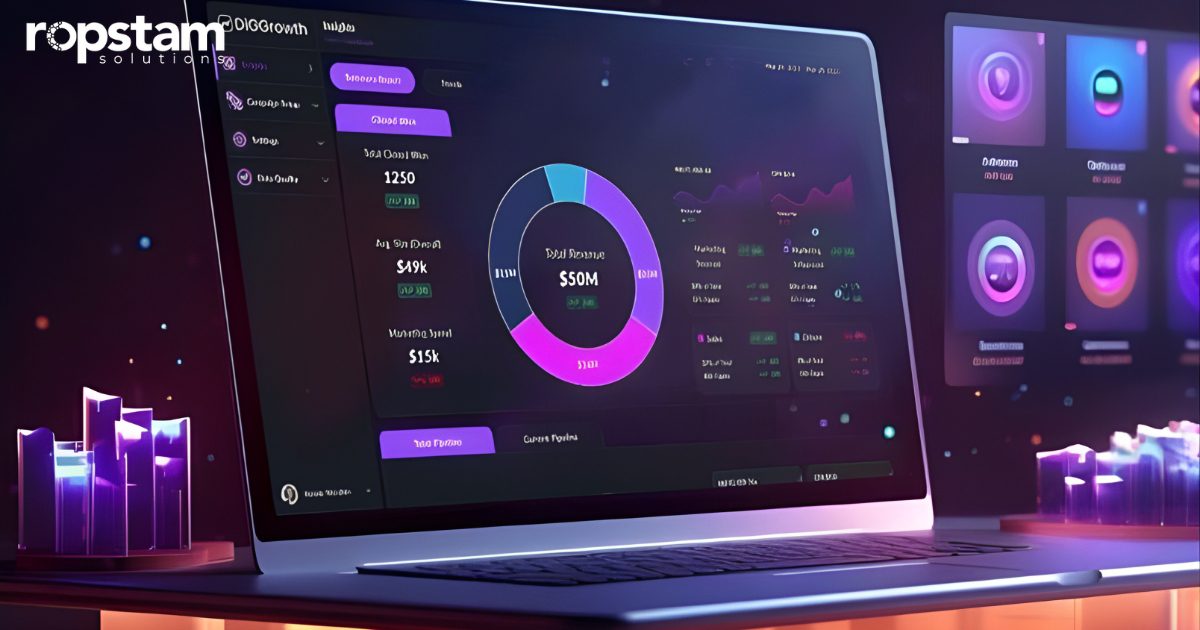
A strong example of how intelligent, data-driven mobile solutions are shaping user experiences can be seen in the Player DEX project, where real-time analytics and advanced processing are used to deliver actionable insights and improve performance tracking for users. Player DEX
Applications include:
- AI-driven personalization based on user behavior and preferences
- Automated workflows that reduce manual app processes
- Smart notifications that adapt to user activity and timing
- Self-improving app features based on continuous learning
Use Cases
- Chatbots with autonomous decision-making for customer support
- Predictive user behavior analysis to improve retention and engagement
- Real-time app optimization for performance and user experience
Benefits for Developers
- Faster development cycles with intelligent automation
- Improved app performance through adaptive systems
- Enhanced user engagement with personalized experiences
- Reduced maintenance effort through self-learning models
With Agentic AI, mobile apps are no longer static tools. They become intelligent digital assistants that continuously evolve, offering better value to both businesses and end users.
6. Agentic AI vs Traditional AI
Key Differences
| Feature | Traditional AI | Agentic AI |
| Decision-making | Human-dependent | Autonomous |
| Flexibility | Limited | High |
| Learning capability | Static | Continuous |
| Use cases | Task-specific | Goal-oriented |
Why Agentic AI Stands Out
Agentic AI provides:
- Greater adaptability
- Real-time decision-making
- Better scalability
7. Business Value of Agentic AI
Key Benefits for Organizations
Adopting Agentic AI delivers clear and measurable value for modern businesses. It helps companies move beyond manual processes and build intelligent systems that work with speed and accuracy. For mobile app development companies and digital enterprises, this means better performance across operations, products, and customer experiences.
Key benefits include:
- Increased efficiency through automated decision-making
- Reduced operational costs by minimizing manual work
- Faster decision-making using real-time data analysis
- Improved customer satisfaction with personalized experiences
- Enhanced innovation through intelligent system support
With Agentic AI, businesses can streamline complex workflows and focus more on growth and strategy instead of routine tasks.
Strategic Advantages
Beyond operational improvements, Agentic AI also creates long-term strategic advantages that strengthen a company’s position in the market.
Key advantages include:
- Competitive differentiation through advanced AI capabilities
- Scalable growth with flexible, self-learning systems
- Data-driven insights for smarter business planning
- Improved agility in changing market conditions
- Better resource allocation across departments
These advantages help organizations stay ahead of competitors while adapting quickly to customer needs and industry changes.
Business Impact
The overall impact of Agentic AI is a shift in how businesses operate. Instead of reacting to problems after they occur, companies can now predict, prevent, and optimize in real time.
This transformation leads to:
- More proactive business strategies
- Stronger operational resilience
- Long-term cost savings
- Sustainable business growth
In simple terms, Agentic AI helps businesses become smarter, faster, and more future-ready in an increasingly competitive digital economy.
8. Implementation Strategies for Agentic AI
Adopting Agentic AI in a business is not just about adding new technology. It requires a clear plan, the right tools, and a step-by-step approach. Companies that implement it properly can unlock strong performance gains, while those that rush often face challenges in control and outcomes.
Steps to Get Started
To implement Agentic AI successfully, businesses should follow a structured approach. This helps reduce risk and ensures smoother adoption across teams and systems.
Key steps include:
- Identify clear business goals and use cases
- Choose the right tools and AI platforms
- Start with small pilot projects before full deployment
- Scale gradually based on results and feedback
- Train teams to work alongside AI systems
This step-by-step approach ensures that Agentic AI is introduced in a controlled and measurable way.
Best Practices
To get the most value from Agentic AI, businesses must follow proven best practices that improve reliability and performance.
Important practices include:
- Ensure high-quality and clean data inputs
- Maintain transparency in AI decision-making
- Continuously monitor system performance
- Set clear boundaries for autonomous actions
- Regularly update models for accuracy
These practices help businesses build trust in Agentic AI systems while improving long-term efficiency.
Common Mistakes to Avoid
Many organizations face issues when they adopt Agentic AI too quickly or without proper planning. Avoiding these mistakes is critical for success.
Common mistakes include:
- Over-reliance on full automation without human oversight
- Ignoring ethical concerns and compliance requirements
- Skipping testing and pilot phases
- Using poor-quality or incomplete data
- Lack of clear governance frameworks
9. Future Trends in Agentic AI
Emerging Trends
The future of Agentic AI includes:
- Multi-agent systems
- AI collaboration
- Real-time decision intelligence
- Integration with IoT
Industry Impact
Industries benefiting from Agentic AI:
- Healthcare
- Finance
- Retail
- Logistics
What to Expect
- Smarter applications
- Increased automation
- Greater efficiency
10. Preparing Your Business for Agentic AI
Readiness Checklist
To prepare for Agentic AI:
- Upgrade infrastructure
- Train teams
- Develop AI strategies
Building a Strong Foundation
- Invest in data management
- Ensure compliance
- Focus on security
Long-Term Success
Businesses that adopt Agentic AI early will gain a competitive advantage and drive innovation.
Conclusion
The rise of Agentic AI marks a major shift in how businesses operate and innovate. By enabling autonomous decision-making and intelligent automation, Agentic AI offers significant opportunities for growth, efficiency, and competitive advantage. However, it also introduces risks that require careful management, including ethical concerns, data privacy, and control challenges.
Organizations that embrace Agentic AI with a strategic and responsible approach will be better positioned to succeed in the future. By balancing innovation with governance, businesses can unlock the full potential of Agentic AI and drive sustainable growth.