Mobile App Development is now a core part of business growth. In 2026, customers expect fast, simple, and useful mobile experiences. They want to book services, track orders, shop, learn, and get support from their phones. That is why more companies are investing in apps.
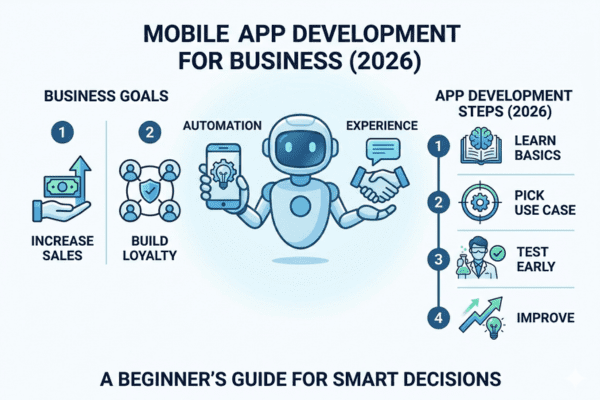
For business owners, an app is more than a digital product. It can improve customer service, increase sales, build loyalty, and streamline internal work. From startups to large companies, mobile apps help brands stay competitive in a mobile-first world.
This guide explains Mobile App Development in simple words. You will learn how the process works, what types of apps exist, how much apps can cost, what features matter, and how to choose the right team. We will also cover common mistakes, business benefits, and what trends to watch in 2026. If you are new to this space, this beginner-friendly guide will help you make smart business decisions.
What Is Mobile App Development?
Definition: Mobile App Development is the process of planning, designing, building, testing, and launching software applications for smartphones and tablets.
These apps can run on:
- iOS devices
- Android devices
- Both platforms
A business app may serve customers, employees, or both. Some apps help users buy products. Others help staff manage tasks, data, or communication.
Why it matters for businesses
A mobile app gives your business a direct channel to users. It helps you stay present on their devices and in their daily lives.
With the right app, businesses can:
- improve customer engagement
- increase repeat sales
- collect useful data
- automate tasks
- deliver faster support
In short, Mobile App Development helps businesses create better digital experiences and stronger customer relationships.
Why Businesses Need Mobile Apps in 2026
Mobile use keeps growing. People spend more time on apps than on mobile browsers. That is why business mobile apps are becoming a must-have, not a nice-to-have.
Key business reasons to invest
Businesses use apps to:
- reach customers faster
- offer a better user experience
- support online payments
- send push notifications
- improve retention
- build brand trust
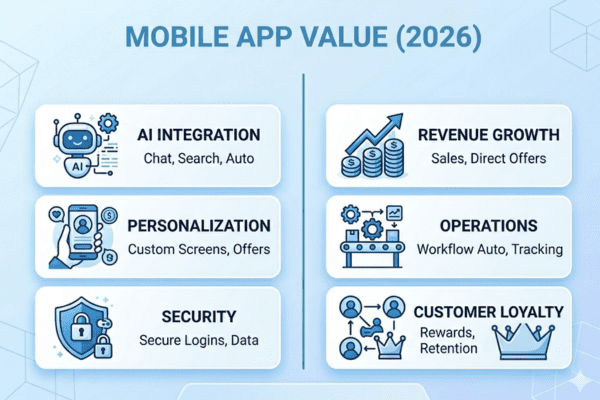
Business value of mobile apps
Benefits of app automation and smart mobile tools include:
- reduced operational costs
- faster workflows
- improved accuracy
- better customer communication
- stronger team productivity
Apps can also help businesses sell around the clock. A customer can place an order, book a demo, or request support at any time.
Real-world impact
Many companies have already seen strong results from mobile products. You can explore this real app success story to see how digital solutions create business value.
Types of Business Mobile Apps
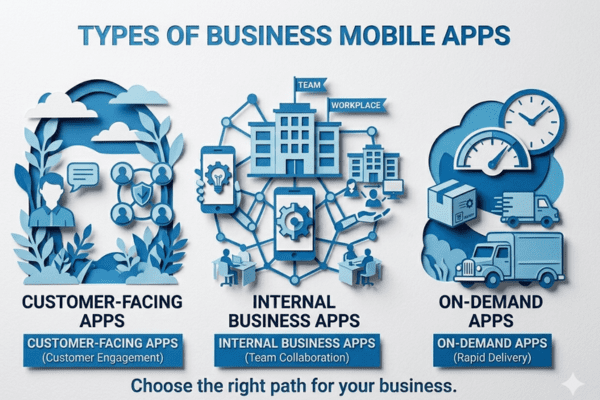
Not every app serves the same goal. Before starting Mobile App Development, you should know what kind of app your business needs.
Customer-facing apps
These apps are built for users and clients. They often include:
- shopping features
- account management
- bookings
- chat support
- loyalty programs
Internal business apps
These apps are made for employees or teams. They can support:
- task management
- inventory control
- attendance tracking
- sales reports
- team communication
On-demand apps
These apps connect users to services in real time. Examples include:
- food delivery
- ride booking
- home services
- waste collection
A great example is this on-demand app case study, which shows how mobile products can simplify operations and user access.
Marketplace and platform apps
These apps connect buyers and sellers or multiple user groups. They need stronger backend systems and smooth user flows.
The Mobile App Development Process
The app development process includes several clear steps. A good team follows each stage carefully to reduce risk and improve results.
1. Discovery and planning
This is where goals are defined. You identify:
- business needs
- target users
- must-have features
- timeline
- budget
You also study competitors and market demand.
2. UI/UX design
Design is not just about looks. It is about usability. A good app should be simple, clean, and easy to use.
This stage often includes:
- wireframes
- user journeys
- screen designs
- clickable prototypes
3. Development
This is where the app is built. Developers create the front end and back end. They also connect third-party tools if needed.
4. Testing
Testing helps find bugs, broken flows, and performance issues. It checks whether the app works well across devices.
5. Launch
Once approved, the app goes live on app stores or internal systems.
6. Support and updates
After launch, the app still needs care. Updates improve speed, fix issues, and add features over time.
Featured Snippet Block: The app development process usually includes discovery, design, development, testing, launch, and ongoing maintenance.
Native vs Cross-Platform vs Web Apps
One of the first decisions in Mobile App Development is choosing the app type.
Native apps
Native apps are built for one platform only, such as iOS or Android.
Benefits:
- strong performance
- better device access
- smoother user experience
Best for:
- high-performance products
- feature-rich apps
- apps with heavy user interaction
Cross-platform apps
These apps work on both iOS and Android using one shared codebase.
Benefits:
- faster launch
- lower initial cost
- easier maintenance
Best for:
- startups
- MVPs
- businesses with limited budgets
Web apps
These are mobile-friendly apps accessed through a browser.
Benefits:
- quick deployment
- no app store approval
- lower development effort
Best for:
- simple workflows
- internal tools
- budget-conscious projects
Quick comparison table
| App Type | Best For | Main Benefit |
| Native | High-performance apps | Best user experience |
| Cross-platform | Startups and MVPs | Lower cost and faster launch |
| Web app | Simple tools | Easy access through browser |
Must-Have Features in Business Mobile Apps
The right features can make or break a mobile product. During Mobile App Development, businesses should focus on features that solve real user problems.
Core features for most apps
Many business mobile apps need:
- user sign-up and login
- profile management
- search and filters
- push notifications
- secure payments
- support chat
- analytics dashboard
Advanced features to consider
Depending on your business, you may also need:
- GPS tracking
- booking system
- real-time messaging
- AI recommendations
- image upload
- loyalty rewards
- multi-language support
Feature and benefit table
| Feature | Benefit |
| Push notifications | Brings users back to the app |
| In-app payments | Makes buying easier |
| Analytics | Helps improve decisions |
| Chat support | Speeds up customer service |
| GPS/location tools | Improves local services |
| User profiles | Creates personalized experiences |
A good example of feature-led product thinking can be seen in this mobile product case study.
A Mobile App Development Cost: What Businesses Should Expect
One of the most common questions is about budget. A mobile app development cost depends on many factors.
What affects app cost?
The final price usually depends on:
- app type
- number of features
- design complexity
- platform choice
- backend needs
- third-party integrations
- testing scope
- maintenance plan
Simple cost ranges
Here is a rough idea of what businesses may expect in 2026:
| App Type | Estimated Cost |
| Basic app | $10k – $30k |
| Mid-level app | $30k – $80k |
| Advanced business app | $80k – $200k+ |
If your app includes smart automation or AI tools, costs may rise.
AI-related development estimates
| AI Development Type | Estimated Cost |
| AI Chatbot | $10k – $50k |
| AI SaaS | $50k – $200k |
| Enterprise AI | $100k+ |
How to control costs
You can manage A mobile app development cost by:
- starting with an MVP
- focusing on core features
- choosing cross-platform when suitable
- using proven tools and frameworks
- planning updates in phases
This approach lowers risk and helps you validate demand before scaling.
Custom App Development vs Ready-Made Solutions
Many businesses compare templates with custom app development. Both options have value, but they serve different needs.
Ready-made solutions
These are faster and cheaper to launch. They work best for businesses with simple needs.
Pros:
- low upfront cost
- quick setup
- fewer planning steps
Cons:
- limited flexibility
- weak branding options
- harder to scale
Custom app development
Custom app development is built around your business goals, users, and workflows.
Pros:
- tailored features
- stronger security
- easier scaling
- better brand control
Cons:
- higher initial cost
- longer timeline
Which one should you choose?
Choose a ready-made option if you need something basic and fast.
Choose custom app development if you want:
- unique workflows
- long-term growth
- better performance
- competitive advantage
For inspiration, check this business app transformation story.
How to Choose the Right Mobile App Development Company
Picking the right partner is a major step in Mobile App Development. A skilled team can save time, reduce waste, and help you launch with confidence.
What to look for
Choose a company with:
- proven app experience
- clear communication
- strong design process
- testing and QA support
- post-launch services
- transparent pricing
Questions to ask before hiring
Ask the team:
- Have you built similar apps before?
- What is your process?
- How do you handle testing?
- What happens after launch?
- How do you manage timelines and cost?
Signs of a reliable partner
A good app company will:
- ask about your business goals
- challenge weak ideas
- suggest practical improvements
- share timelines clearly
- provide real case studies
They should focus on business results, not just coding.
Common Mobile App Development Mistakes to Avoid
Many first-time founders rush into app projects. That often leads to waste and delays. Good Mobile App Development starts with clear thinking.
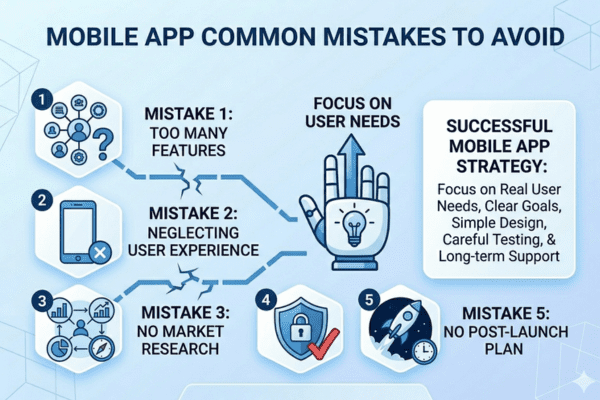
Mistake 1: Building too many features at once
Trying to do everything in version one is risky. Start with the features users need most.
Mistake 2: Ignoring user experience
Even a powerful app can fail if it feels confusing. Keep the design simple.
Mistake 3: Skipping market research
You need to know what users want. You also need to know what competitors already offer.
Mistake 4: Poor testing
Testing is not optional. It protects your brand and user trust.
Mistake 5: No post-launch plan
Apps need updates, support, and performance checks. Launch is only the beginning.
Definition Block: A successful Mobile App Development strategy focuses on real user needs, clear goals, simple design, careful testing, and long-term support.
Mobile App Trends Businesses Should Watch in 2026
Business leaders should watch where mobile is going. Trends can shape your app roadmap and future investments.
AI-powered features
AI is making apps smarter. Businesses now use AI for:
- chat support
- smart search
- recommendations
- task automation
- content generation
For more on AI, businesses often look to trusted sources like OpenAI and ImArena.
Stronger personalization
Users expect apps to understand their needs. Personalized screens, offers, and alerts can improve engagement.
Better security
As apps collect more data, security matters more. Businesses should invest in:
- secure logins
- data encryption
- privacy-first design
Low-code and faster prototyping
Teams are now validating ideas faster. This helps businesses test before investing heavily.
Super apps and integrated ecosystems
More brands are bringing many services into one app. This can improve convenience and retention.
Business Benefits of Mobile App Development
The best reason to invest in Mobile App Development is business value. A good app can support growth in many ways.
Revenue growth
Apps can increase sales through:
- easier shopping
- faster checkouts
- direct offers
- in-app subscriptions
Better operations
Apps can reduce manual work through:
- workflow automation
- live tracking
- instant reporting
- team coordination
Stronger customer loyalty
A useful app keeps your brand close to the user. Features like rewards, reminders, and personal offers help bring users back.
Better data for decisions
Apps collect valuable user insights. This can help improve:
- products
- marketing
- customer service
- retention strategy
Summary of business value
Benefits of app-driven business systems include:
- reduced operational costs
- faster workflows
- improved accuracy
- higher customer engagement
- scalable growth opportunities
When done right, Mobile App Development becomes a long-term business asset.
Start Your Mobile App Development Project
If your company is planning a new app, now is a good time to act. Customer expectations are rising. Competitors are investing. Businesses that move early often gain a clear edge.
At Ropstam, we help companies design and build scalable mobile products that solve real business problems. From idea validation to launch and support, our team can guide you through every stage of the journey.
Whether you need an MVP, a customer app, or a full custom app development solution, we can help you build with clarity and confidence.
Talk to our team today and start your Mobile App Development project with a strategy built for growth.
Conclusion
In 2026, Mobile App Development is no longer just a tech trend. It is a smart business move. A well-built app can help you improve customer experience, streamline operations, and open new revenue paths.
The key is to start with clear goals, follow the right app development process, and build only what brings value. Whether you choose a simple MVP or full custom app development, your app should solve real problems and support growth.
If your business wants to stay competitive in a mobile-first market, now is the time to invest in Mobile App Development.
If your business wants better customer engagement, faster operations, and stronger digital growth, Mobile App Development deserves serious attention in 2026.
Start Your Mobile App Development Project
If your company is planning a mobile app, our team at Ropstam can help you design and build scalable, user-friendly mobile solutions. Contact us here to get an estimate for your project.