Introduction
Large Language Models are transforming how businesses interact with technology, customers, and data. From chatbots to automated content creation, these models are powering some of the most advanced AI solutions used today. As companies look for smarter and more scalable digital systems, understanding how these models work becomes essential .At their core, these are designed to process and generate human-like language. They are trained on massive datasets that include books, articles, websites, and other forms of text. Through this training, they learn statistical patterns, grammar structures, context, and relationships between words.
These models are built using transformer architecture, which helps them understand context over long passages of text more effectively than traditional machine learning models. As a result, they can perform a wide range of tasks such as answering questions, summarizing content, translating languages, and even writing code. Businesses use these Models to improve customer support through intelligent chatbots, automate content creation for marketing, and enhance data analysis processes. Their ability to scale and adapt makes them a key component of modern AI-driven systems, helping organizations improve efficiency and decision-making across multiple industries.
For businesses, the value goes beyond simple automation. These models help improve decision-making, reduce operational costs, and enhance user experiences. Whether it is a mobile app, enterprise platform, or eCommerce system, integrating AI-driven solutions can create a strong competitive advantage. This guide provides a clear and structured explanation of how LLM work, their architecture, and their real-world business impact. It is designed for decision-makers, developers, and companies looking to adopt AI in a practical way. Looking to integrate them into your business? Let our experts design a custom AI solution for you.
What Are LLM ?
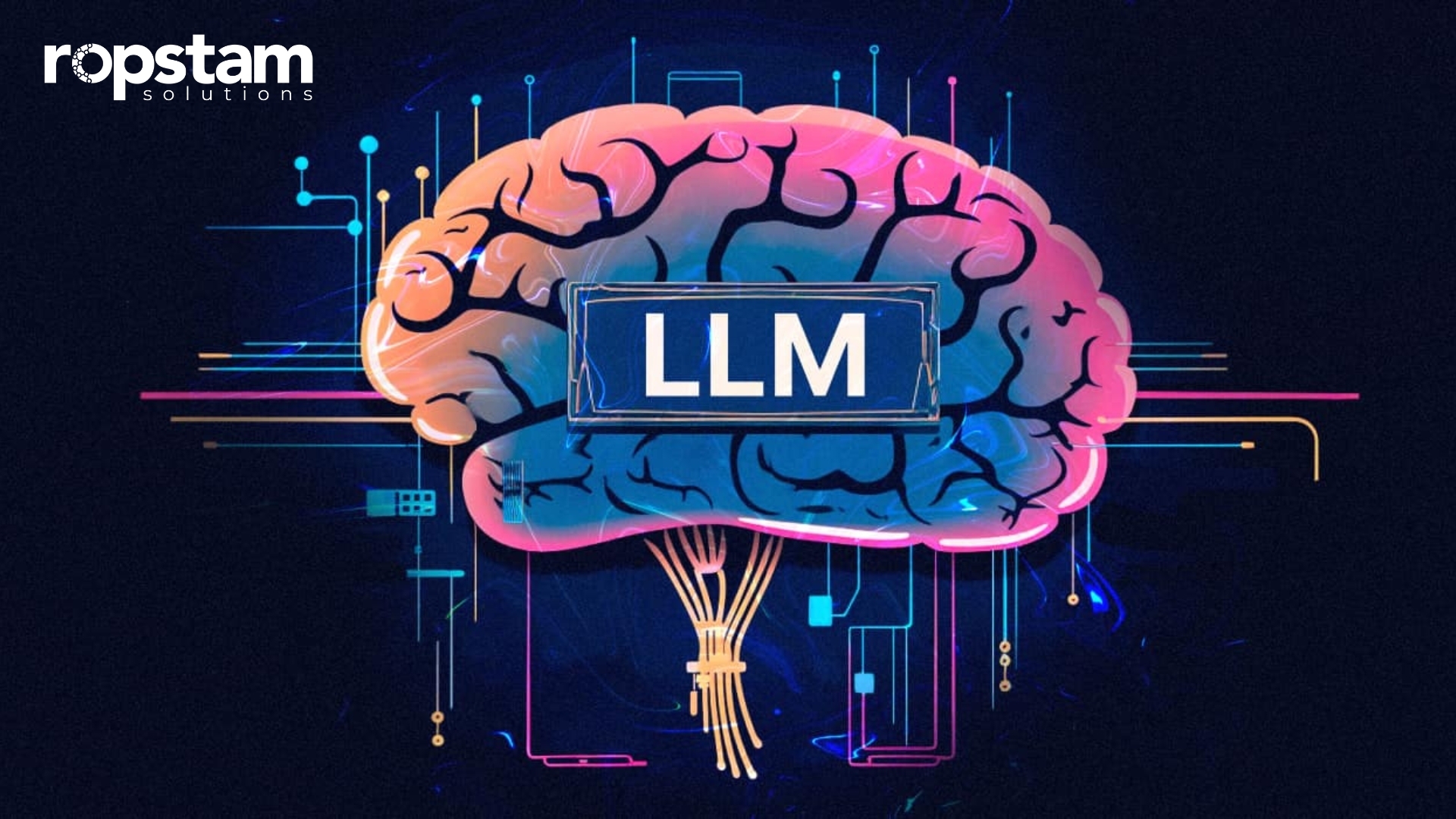
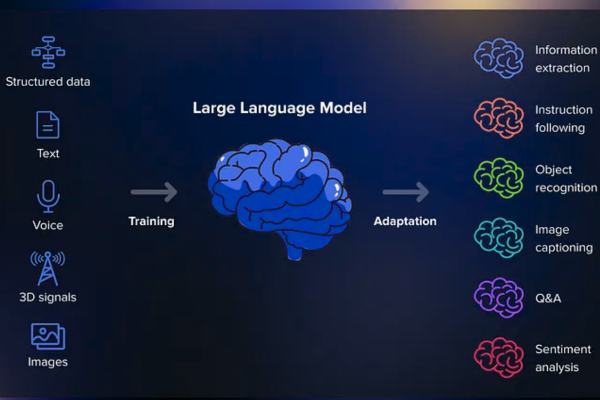
LLMs are advanced artificial intelligence systems designed to understand, process, and generate human language. They are trained on vast amounts of data, including books, websites, research papers, and real-world conversations. Through this training, they learn grammar, context, tone, and relationships between words, enabling them to produce coherent and meaningful responses. These models can perform tasks such as answering questions, writing content, translating languages, and summarizing information. By recognizing patterns in language, these simulate human-like understanding, making them powerful tools for automation, communication, and intelligent applications across various industries and digital platforms today.
Key Characteristics
- Trained on massive datasets
- Can generate human-like text
- Understand context and intent
- Support multiple languages
- Continuously improve with data
Why They Matter
- Enable automation in communication
- Improve customer experiences
- Power intelligent applications
- Support real-time responses
Common Use Cases
- Chatbots and virtual assistants
- Content generation tools
- Language translation
- Code generation
- Data analysis
These are a major part of modern Natural Language Processing Models. They are used across industries to simplify workflows and enhance productivity. Businesses can use them to reduce manual work and improve efficiency.
How LLM Work
Understanding how these work requires looking at how they process data and generate responses. These models rely on patterns learned during training and break text into smaller units called tokens. Each token is analyzed in relation to the surrounding context, allowing the model to understand meaning more accurately. Using transformer architecture, the model assigns importance to different words in a sentence to capture context and relationships. When a user enters a prompt, the model predicts the most likely next word step by step, generating a coherent response. This process enables them to produce human-like and context-aware outputs efficiently.
Training Process
- Models are trained on large datasets
- They learn relationships between words
- Patterns are stored as parameters
- Training requires high computing power
Prediction Mechanism
- Input text is broken into tokens
- The model predicts the next word
- It repeats this process step by step
- Output is generated in real time
Learning Patterns
- Recognizes grammar and syntax
- Understands context from sequences
- Adapts to different writing styles
Example Workflow
- User inputs a question
- Model analyzes the text
- It predicts the best response
- Generates output instantly

Architecture Explained
The architecture behind these models is what makes them powerful. It is based on deep learning and neural networks, specifically the transformer architecture. This structure allows the model to process large amounts of text in parallel rather than sequentially, making it faster and more efficient. It uses components like self-attention mechanisms to understand how different words in a sentence relate to each other, even if they are far apart. Multiple layers of neural networks refine the understanding of language at each stage, improving accuracy and context awareness. This layered design enables LLMs to generate highly relevant, coherent, and human-like responses.
Core Components
- Input layer
- Hidden layers
- Output layer
- Attention mechanism
Model Layers
- Multiple layers process data
- Each layer extracts features
- Deeper layers improve understanding
Parameters
- Models have billions of parameters
- More parameters mean better accuracy
- Requires strong infrastructure
Data Flow
- Input text enters the model
- Processed through layers
- Output is generated based on learned patterns
Understanding LLM Architecture Explained helps businesses make better decisions when implementing AI solutions. It shows how models can handle complex tasks at scale.
Transformer Model in AI
The Transformer Model in AI is the backbone of modern LLM. It introduced a new way to process language efficiently by using a mechanism called self-attention. This allows the model to focus on the most relevant words in a sentence, regardless of their position, helping it understand context more accurately than older sequential models. Unlike traditional RNNs, transformers process entire sentences in parallel, which significantly improves speed and scalability. They consist of encoder and decoder layers that work together to analyze and generate text. This architecture has become the foundation for most advanced AI systems used in natural language processing today.
Key Features
- Uses attention mechanism
- Processes data in parallel
- Handles long text sequences
- Improves performance
Attention Mechanism
- Focuses on important words
- Understands relationships in text
- Improves context handling
Benefits
- Faster training
- Better accuracy
- Scalable architecture
Why It Matters
- Replaced older models like RNNs
- Enables advanced AI applications
- Supports real-time processing
The Transformer Model in AI is a key reason why LLM are so effective today. It allows them to deliver accurate and meaningful results.
Natural Language Processing Models and LLMs
Natural Language Processing (NLP) Models are designed to help machines understand, interpret, and respond to human language in a meaningful way. They form the foundation of many AI applications such as sentiment analysis, language translation, and text classification.
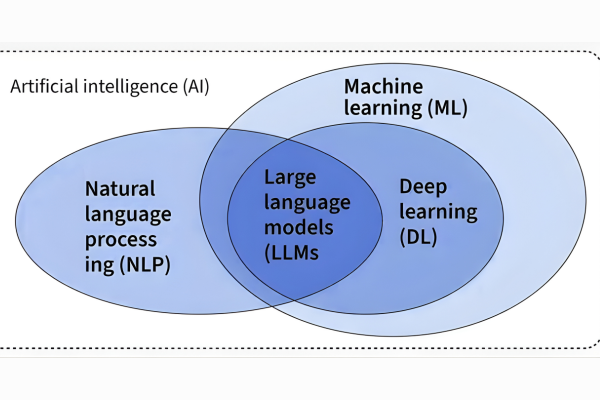
These Models are an advanced evolution of these NLP systems. Unlike traditional NLP models that are often built for specific tasks, LLMs are trained on massive and diverse datasets, allowing them to handle a wide range of language tasks within a single model. They can understand context more deeply, generate human-like text, and adapt to different prompts with high accuracy.
While NLP models focus on structured language processing, modern AI systems leverage deep learning and transformer architecture to achieve more flexible and powerful language understanding. This makes them highly effective for applications like chatbots, content generation, summarization, and intelligent virtual assistants across AI-driven platforms.
Evolution of NLP
- Rule-based systems
- Statistical models
- Machine learning models
- Deep learning models
Role of LLMs
- Improve accuracy
- Handle complex language
- Generate human-like responses
Key Capabilities
- Sentiment analysis
- Text classification
- Language translation
- Speech recognition
Business Applications
- Customer support automation
- Marketing content generation
- Data insights
Natural Language Processing Models combined with llms create powerful AI systems that improve business operations and customer engagement.
Generative AI Language Models
Generative AI Language Models are a subset of them focused on content creation. They are designed to produce new and original outputs based on the input they receive, rather than just analyzing or classifying text. These models can generate human-like content such as articles, emails, stories, product descriptions, and even software code.
They work by learning patterns from massive datasets and using that knowledge to predict and construct meaningful sequences of words or symbols. This allows them to respond creatively while still maintaining context and coherence. Unlike traditional rule-based systems, Generative AI models adapt to different prompts and writing styles with ease.
These models are widely used in industries such as marketing, software development, education, and customer support. By automating content creation and enhancing productivity, Generative AI Language Models are becoming a key driver of innovation in modern AI applications.
Key Features
- Generate new content
- Adapt tone and style
- Support multiple formats
Use Cases
- Blog writing
- Email automation
- Product descriptions
- Social media content
Benefits
- Saves time
- Reduces costs
- Improves productivity
Challenges
- Requires quality data
- Needs monitoring
- Risk of incorrect output
Generative AI Language Models are widely used in mobile apps and business tools. They help companies scale content creation and automate communication.
The GreenTag case study by Ropstam directly reflects the real-world application of these models and advanced AI systems discussed in the blog. In the GreenTag mobile app project, AI was integrated to analyze property data, detect defects, and generate structured inspection reports, which is a practical example of how LLM work in business environments. The app also introduced “Ask Dena,” an AI-powered chatbot built using modern generative AI capabilities to allow users to interact with property data in natural language. This demonstrates how Generative AI Language Models can transform raw data into meaningful, conversational insights.
From an architectural perspective, the GreenTag solution aligns closely with the Transformer Model in AI, which powers modern language understanding and response generation. The system processes user inputs, understands context, and delivers structured outputs such as repair estimates and property summaries. This is a real-world implementation of LLM Architecture Explained, where multiple AI layers work together to interpret and respond intelligently. In addition, the app showcases how Natural Language Processing Models enhance mobile app functionality by enabling users to ask questions like “What issues are in this property?” and receive instant, accurate responses. This bridges the gap between technical data and user-friendly communication, which is a core strength of advanced AI language systems.
Overall, the GreenTag case study proves how modern AI language systems are not just theoretical concepts but practical tools that power intelligent mobile applications. It highlights how Ropstam uses AI-driven solutions to build smarter apps that improve user experience, automate workflows, and deliver real business value through innovation.
Key Benefits
- Automate repetitive tasks
- Improve customer support
- Enhance user experience
- Increase productivity
- Enable data-driven decisions
ROI Impact
- Reduce operational costs
- Increase conversion rates
- Improve response times
- Boost customer satisfaction
Industry Applications
- Healthcare
- Finance
- eCommerce
- Education
- Technology
Competitive Advantage
- Faster innovation
- Better customer insights
- Scalable solutions
Applications in Mobile App Development
Applications in Mobile App Development show how Large Language Models are reshaping modern mobile experiences. These models are widely used to enhance functionality, improve user interaction, and create smarter applications. One of the most common uses is in AI-powered chatbots that provide instant customer support within apps, offering human-like responses and 24/7 assistance.
LLMs also improve search functionality by enabling natural language queries, allowing users to find information more easily without using exact keywords. In addition, they support personalized recommendations by analyzing user behavior and preferences, making apps more engaging and relevant.
For developers, Large Language Models assist in code generation, debugging, and automating repetitive development tasks, which speeds up the app development process. They are also used in content generation for in-app text, notifications, and dynamic messaging.
Key Features in Apps
- AI chatbots
- Voice assistants
- Smart recommendations
- Content generation
Benefits for Apps
- Improve engagement
- Personalize user experience
- Automate interactions
Example Use Cases
- Customer support apps
- eCommerce platforms
- Learning apps
- Healthcare apps
Integration
- API-based integration
- Cloud deployment
- Scalable architecture
Mobile app companies can use Large Language Models to build smarter applications that meet modern user expectations.
Challenges and Limitations
Despite their benefits, Large Language Models have several challenges and limitations that businesses must consider before implementation. One major concern is accuracy, as these models can sometimes generate incorrect or misleading information, often referred to as hallucinations. This can impact decision-making if outputs are not properly verified.
Another limitation is the high computational cost. Training and running Large Language Models require significant processing power, memory, and infrastructure, which can be expensive for many organizations. Data privacy is also a concern, especially when sensitive business or customer information is processed through AI systems.
Additionally, LLMs may inherit biases present in their training data, leading to unfair or unbalanced outputs. They also lack true understanding or reasoning, as they generate responses based on patterns rather than real comprehension.
Key Challenges
- High training cost
- Requires large datasets
- Risk of bias
- Data privacy concerns
Technical Issues
- Model complexity
- Infrastructure requirements
- Maintenance needs
Ethical Concerns
- Misuse of AI
- Fake content generation
- Lack of transparency
Solutions
- Use high-quality data
- Monitor outputs
- Implement AI governance
Understanding these challenges helps businesses use Large Language Models responsibly and effectively.
Future of Large Language Models
The future of Large Language Models looks promising. They will continue to evolve and improve.
Emerging Trends
- Smaller and faster models
- Better accuracy
- Multimodal AI
- Real-time learning
Business Impact
- Fully automated systems
- Smarter decision-making
- Improved customer experiences
Innovation Areas
- AI-powered apps
- Intelligent automation
- Predictive analytics
Long-Term Vision
- Human-like AI systems
- Seamless integration
- Scalable AI solutions
These will play a key role in shaping the future of digital transformation.
Comparison Table: Traditional NLP vs LLM
| Feature | Traditional NLP | LLM |
| Data Size | Small datasets | Massive datasets |
| Accuracy | Moderate | High |
| Scalability | Limited | Highly scalable |
| Context Understanding | Basic | Advanced |
| Use Cases | Simple tasks | Complex applications |
Conclusion
Large Language Models are one of the most powerful technologies in modern AI. They are transforming how businesses operate, communicate, and innovate. From improving customer experiences to automating complex workflows, their impact is significant.
Understanding how advanced AI language systems work and their architecture helps businesses make informed decisions. With the right strategy, companies can use these models to gain a competitive advantage and scale their operations efficiently.
As AI continues to evolve, adopting intelligent language technologies is no longer optional. It is a strategic move for businesses that want to stay ahead in a digital-first world. Ready to integrate AI into your business or mobile app? Our experts can help you build smart, scalable solutions powered by cutting-edge AI. Get a project estimate today. Let’s turn your idea into an intelligent, future-ready application.