Introduction
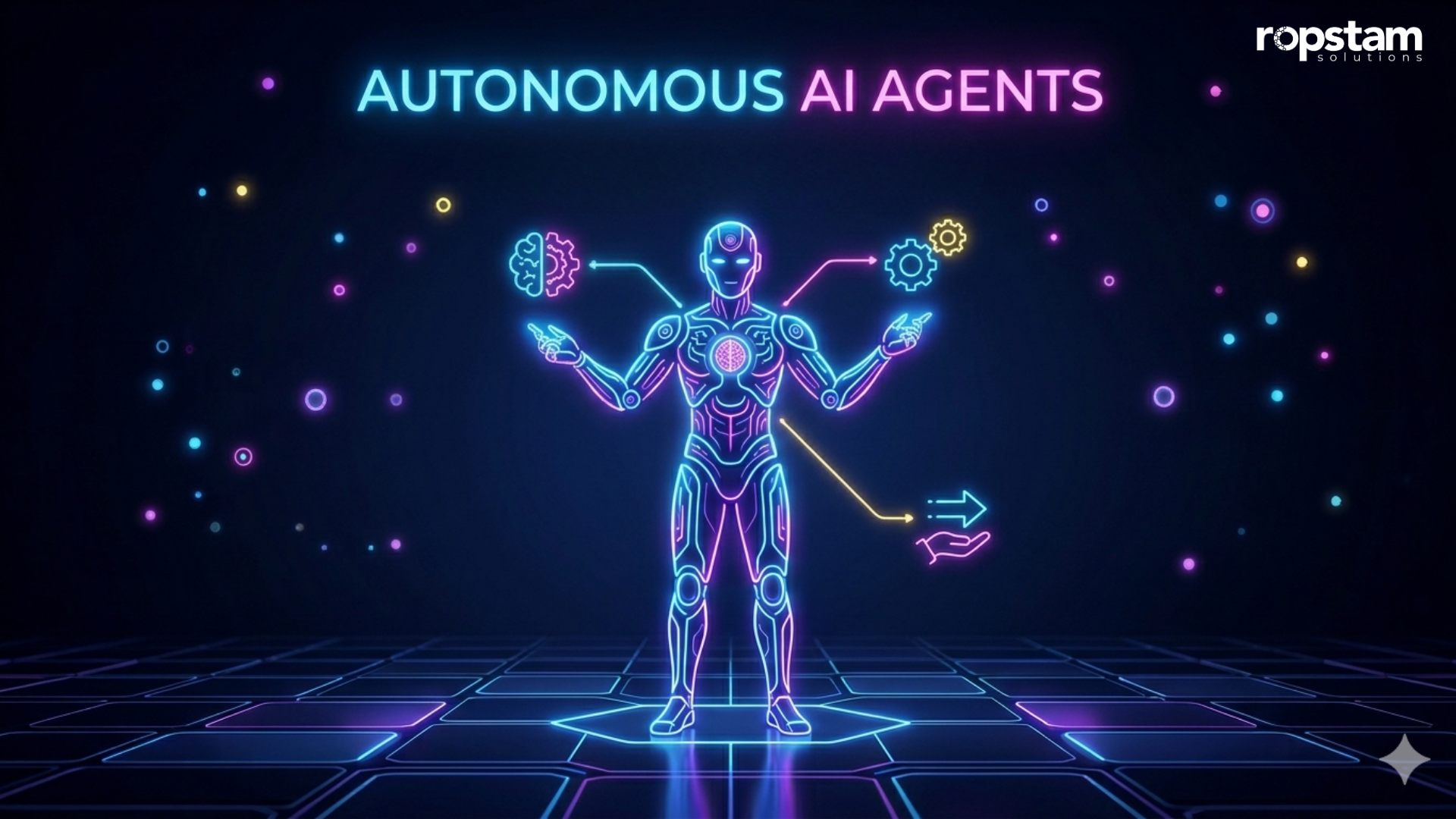
Autonomous AI agents are changing the way businesses work. These smart systems can think, plan, and act on their own. They do not need a human to guide every step. They are not just simple tools. They are like digital workers that make decisions and finish tasks automatically.
More and more companies are now using these to:
- Save time on repeated tasks
- Make faster decisions
- Cut down on costs
- Grow their business quickly
Whether you run a small startup or a big company, AI agents can give you a strong edge over your competitors. This blog will show you how these agents work, why they matter, and how you can use them in your business.
Ready to build something powerful? Start your project today and let our expert team help you create a custom AI solution that brings real results.

What Are Autonomous AI Agents?
These are software programs that can look at their environment, make decisions, and take actions — all on their own, without any human help. They use artificial intelligence, machine learning, and language models to finish complex tasks by themselves.
These agents are very different from basic automation tools. A simple bot just follows fixed rules. But an AI agent does much more. It:
- Understands what is happening around it
- Adjusts when the situation changes
- Plans tasks step by step
- Learns from what happened before
- Works toward a clear goal
Think of an autonomous agent like a digital employee. You give it a goal. It figures out how to reach that goal on its own.
Why AI Agents Matter for Modern Businesses
Businesses today face many problems:
- Labor costs keep going up
- Customers want faster and better service
- Decisions need to be made quickly
- Data is growing every day
These help fix all of these problems. They work all day and all night. They never get tired. They process information much faster than any human team.
Here is why businesses are spending money on intelligent agent systems right now:
- Speed: AI agents finish tasks in seconds
- Accuracy: They make far fewer mistakes than humans
- Scale: One agent can handle thousands of tasks at the same time
- Cost savings: Less manual work means you spend less money
- Consistency: They follow the same logic every single time
For example, in this real-life example, we helped a business build a smart app-based solution that automated key user interactions. It improved efficiency and gave customers a much better experience. This shows exactly how intelligent systems create real business value.
How these AI Agents Actually Work
Understanding how AI agents work becomes easy when you break it into simple steps.
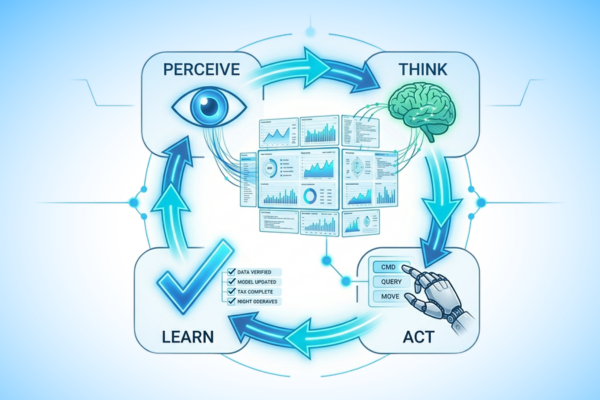
Every AI agent follows a core loop:
- Perceive
The agent collects information from its surroundings - Think
It looks at that information and makes a plan - Act
It takes action based on that plan - Learn
It checks the result and gets better next time
This loop keeps running again and again until the job is done.
The Core Parts of an AI Agent
Every autonomous agent is made up of a few key parts:
- Sensors or Inputs: These collect data like text, images, or information from apps
- Brain or LLM: A large language model reads the data and makes decisions
- Memory: Short-term and long-term memory save what the agent has learned
- Tools: The agent uses tools like search engines, calculators, or other apps
- Output or Actions: The agent gives results or takes actions in the real world
AI Agent Architecture Explained
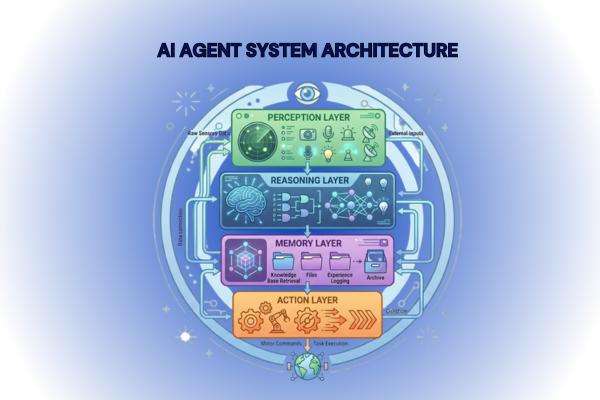
The AI agent architecture is the design plan that holds everything together. Think of it like the blueprint of a house.
Here is a simple look at the different layers:
Perception Layer
- Gets inputs from users, systems, or sensors
- Turns raw data into something the agent can understand
Reasoning Layer
- Uses the AI model to think through the problem
- Plans the steps needed to finish the task
- Decides which tools to use
Memory Layer
- Short-term memory: Remembers what is happening right now in the task
- Long-term memory: Saves knowledge across many sessions
- External memory: Pulls data from databases or documents when needed
Action Layer
- Carries out the plan
- Calls apps, writes code, searches the web, or sends messages
- Reports the result back to the system
Feature and Benefit Breakdown of Autonomous AI Agents
| Feature | Business Benefit |
| LLM-powered reasoning | Makes smart decisions based on context |
| Multi-step task planning | Handles complex work flows automatically |
| Tool integration with APIs and search | Connects easily with your current systems |
| Long-term memory | Learns from past work and gets better over time |
| Multi-agent collaboration | Many agents work together on big tasks |
| Real-time data processing | Gives you the latest information instantly |
| Reinforcement learning | Agent improves its performance with every task |
| Natural language interface | Easy to use no coding skills needed |
The AI Decision-Making Process Step by Step
The AI decision-making process inside an autonomous agent is more organized than most people think.
Here is how an agent makes a decision:
Step 1: Understand the Goal
- The agent reads the instruction from the user
- It breaks the big goal into smaller, easier tasks
Step 2: Gather Information
- It searches databases, apps, or the web
- It remembers useful things from past sessions
Step 3: Plan the Approach
- It creates a step-by-step action plan
- It picks the best tools for each step
Step 4: Execute the Plan
- It does one action at a time
- It checks the result after each action
Step 5: Evaluate and Adjust
- If something goes wrong, it tries a different way
- It updates its knowledge so it does better next time
This is what makes AI agents so powerful. They do not just react to things. They plan, act, and keep improving.
For a great real-world example of smart planning in digital products, explore this business transformation case study to see how Ropstam built an intelligent platform that automated workflows and improved user engagement for a growing business.
What Are Reinforcement Learning Agents?
Featured Definition:
Reinforcement learning agents are AI systems that learn by trying things and seeing what happens. When they make a good decision, they get a reward. When they make a bad decision, they get a penalty. Over time, they learn the best way to get the most rewards.
Reinforcement learning is one of the most powerful ways to train AI. It is used in:
- Game-playing AI like AlphaGo
- Robots that move and do physical tasks
- Financial trading systems
- Supply chain management
- Personalized recommendation engines
How Reinforcement Learning Works
- The agent takes an action in its environment
- The environment gives the agent a reward or a penalty
- The agent changes its strategy to get more rewards
- This cycle repeats thousands or even millions of times
- The agent slowly learns the best possible behavior
Companies like OpenAI have led the way in reinforcement learning. Their techniques are now used in commercial AI products all over the world.
Platforms like Arena.ai are also building enterprise-level autonomous agent tools. These help companies automate complex business workflows using LLM-powered agents.
Multi-Agent Systems: When AI Agents Work as a Team
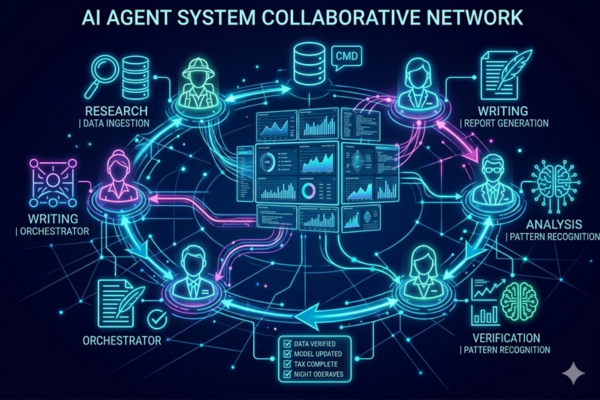
Multi-agent systems are groups of autonomous agents that work together to finish bigger tasks.
Instead of one agent doing everything, multiple specialized agents work side by side:
- Agent 1 researches the topic
- Agent 2 writes the content
- Agent 3 reviews and edits the work
- Agent 4 publishes and shares it
This teamwork makes multi-agent systems extremely powerful for complex business operations.
Key Benefits of Multi-Agent Systems
- Tasks get done faster because agents work at the same time
- Results are better because each agent is a specialist
- If one agent fails, the others keep going
- Easier to scale up for large enterprise needs
- More accurate results because agents check each other’s work
Where Multi-Agent Systems Are Used
- Software development: Agents write, test, and fix code together
- Customer service: Different agents handle different types of questions
- Research: Agents gather, study, and summarize information
- Marketing: Agents create, schedule, and improve campaigns
- Finance: Agents watch, study, and report on transactions
An AI agent does not just react to what is right in front of it. It:
- Thinks about what will happen next
- Looks at different options
- Picks the best path forward
- Adjusts its plan when things change
Types of Reasoning Used by AI Agents
- Deductive reasoning: Drawing conclusions from things it already knows
- Inductive reasoning: Finding patterns from past experience
- Abductive reasoning: Making the best guess when information is limited
- Causal reasoning: Understanding what causes what
AI Planning Strategies
- Goal-based planning: Break a big goal into small, doable steps
- Hierarchical planning: Organize tasks by priority and order
- Reactive planning: Respond quickly to changes as they happen
- Proactive planning: Spot and prevent problems before they start
This kind of organized thinking is what allows autonomous systems in AI to deal with real-world complexity.
Business Value of Autonomous AI Agents
Investing gives businesses clear and measurable results.
Here is what businesses gain:
- ✅ Lower operational costs
Less manual work and fewer mistakes mean less money spent - ✅ Faster time to market
Agents speed up how fast you can deliver products and services - ✅ Better customer experience
Customers get smart, helpful support at any hour of the day - ✅ Stronger data insights
Agents read and analyze data as it happens in real time - ✅ Smarter decisions
AI-driven suggestions help leaders make better choices - ✅ Higher employee productivity
Your team can focus on creative work that matters more - ✅ Scalable operations
Handle more customers without hiring more staff - ✅ Competitive advantage
Stay ahead of businesses still using old, slow systems - ✅ Risk reduction
Agents watch your systems and alert you when something goes wrong - ✅ Revenue growth
Smarter automation leads to more sales and better conversions
For a real-world look at how smart digital solutions drive business growth, review this eCommerce success story where Ropstam built a scalable and feature-rich platform. It helped a business grow its customer base and improve its daily operations in a big way.
Autonomous AI Agent Development Cost Breakdown
Knowing the cost of building autonomous AI agent solutions helps you plan your budget properly.
| AI Development Type | Estimated Cost |
| Basic AI Chatbot Agent | $5,000 – $20,000 |
| Single-Task Autonomous Agent | $20,000 – $50,000 |
| Multi-Agent System (Small) | $50,000 – $100,000 |
| LLM-Powered Business Agent | $30,000 – $80,000 |
| Enterprise Multi-Agent Platform | $100,000 – $300,000+ |
| Custom AI Agent with Integrations | $40,000 – $120,000 |
| Reinforcement Learning Agent | $60,000 – $150,000 |
| AI Agent SaaS Product | $80,000 – $250,000+ |
Note: Costs vary based on how complex the project is, what systems need to connect, how big the team is, and where it will be deployed. Contact our team for a custom estimate made just for your project.
Start Your Autonomous AI Agent Development Project
Are you ready to bring the power ofAI agents into your business?
At Ropstam, we specialize in building:
- Custom LLM-powered agents made for your specific business needs
- Multi-agent systems that automate complex and repetitive workflows
- AI agent frameworks that connect with your existing technology
- Scalable autonomous systems that grow as your business grows
- Intelligent agent solutions for web, mobile, and enterprise platforms
Our team has delivered powerful digital solutions across many industries. Whether you need a simple AI assistant or a full enterprise multi-agent platform, we have the skills and experience to make it real.
Do not let your competitors get ahead of you. If you want to start your project, contact us here and let us build something extraordinary together.
Conclusion
AI agents are one of the biggest changes in how businesses run today. They can plan, decide, act, and learn all without human help. From LLM-powered agents and reinforcement learning to multi-agent systems and AI planning, these technologies are not something that will happen in the future. They are happening right now.
Businesses that start using these AI agents today will:
- Work faster and make smarter decisions
- Spend less money and make fewer mistakes
- Scale their operations without any limits
- Give their customers a much better experience
- Stay well ahead of their competition
The key is to start with the right plan, build the right architecture, and work with the right team.
If you want to build a powerful and scalable AI agent solution for your business, visit our team and start your project here. We are ready to help you turn your AI idea into something real.