
Imagine having a super-smart digital assistant that does not just follow your orders it actually thinks, plans, and gets things done all by itself. That is exactly what autonomous AI agents are doing for businesses today. These intelligent systems are helping companies work faster, smarter, and more efficiently than ever before. Autonomous AI agents can handle complex tasks, make decisions on their own, and even learn from their experiences all without a human telling them what to do every step of the way. If you have ever wondered how big companies seem to operate like well-oiled machines, the secret is increasingly coming down to this game-changing technology. In this blog, we are going to break it all down in simple, easy-to-understand language. Visit our page to get your project ready.

What Exactly Are Autonomous AI Agents?
Let us start with the basics.
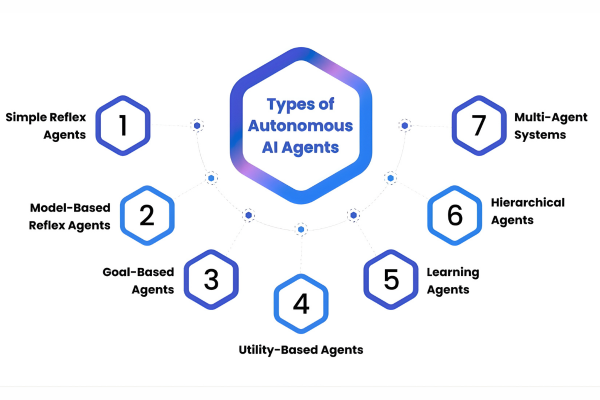
An autonomous AI agent is basically a smart computer program that can work on its own. You give it a goal, and it figures out how to reach that goal by itself. It does not need someone to hold its hand through every step.
Think of it like this. When you use Google Maps, you type in your destination and the app figures out the best route for you. Now imagine if that app could also book your hotel, arrange your meetings, send emails on your behalf, and even reschedule your plans if something goes wrong all on its own. That gives you a rough idea of what AI agents can do.
These agents use powerful technologies like:
- Artificial Intelligence to think and reason
- Machine Learning to get smarter over time
- Natural Language Processing to understand and write human language
- APIs and tools to connect with other software and systems
They can browse the internet, write code, analyze data, send messages, and perform hundreds of other tasks automatically and continuously.
What Is Digital Transformation and Why Does It Matter?
Before we talk more about AI agents, let us quickly understand digital transformation.
Digital transformation simply means a business using modern technology to change and improve the way it works. It is about moving away from old, slow, paper-based or manual processes and replacing them with smart digital systems.
For example:
- A bank moving from physical paperwork to online account management
- A hospital switching from paper records to digital patient files
- A retail store using online platforms to sell products globally
Digital transformation helps businesses serve customers better, work more efficiently, and stay competitive. But here is the problem even after going digital, many companies still need lots of people to manage, analyze, and act on all the data and tasks that come with digital systems.
That is where AI agents come in. They fill that gap perfectly.
How AI Agents Are Speeding Up Digital Transformation
Here is the big picture: digital transformation gives businesses the tools, and AI agents give them the brainpower to use those tools without depending entirely on human effort.
Let us say a company has moved all its customer data to the cloud. Great. But someone still needs to look at that data, spot trends, and make decisions. Traditionally, that means hiring data analysts, waiting for reports, and then acting on outdated information.
An AI agent can do all of that in real time automatically. It spots the trend, generates the report, and even takes action based on what it finds. No waiting. No bottleneck. No extra staff needed.
This is why AI agents are becoming the engine behind successful digital transformation. They turn digital systems from passive tools into active, thinking machines.
Real-World Examples Across Different Industries
You do not have to be a tech company to benefit from AI agents. Here is how different industries are already using them:
Healthcare:
Hospitals use AI agents to handle appointment scheduling, manage patient records, process insurance claims, and even assist doctors with research. This frees up medical staff to focus on actual patient care instead of paperwork.
Banking and Finance:
Banks use AI agents to detect fraud the moment it happens, check whether transactions comply with regulations, and even provide personalized financial advice to customers all automatically.
Retail and Online Shopping:
E-commerce companies use agents to recommend products to customers, manage stock levels, predict what products will be in demand, and run marketing campaigns across social media and email at the same time.
Manufacturing:
Factories use AI agents to monitor machines and predict when they might break down before it actually happens. This prevents costly downtime and keeps production running smoothly.
Legal Services:
Law firms are using agents to review contracts, conduct research, and summarize lengthy legal documents saving lawyers hundreds of hours of work.
The common thread across all these examples? AI agents take complex, time-consuming work and handle it automatically, accurately, and at a speed no human team could match.
How AI Agents Make Businesses More Efficient
Efficiency is one of the biggest benefits of using AI agents, and it shows up in very practical ways.
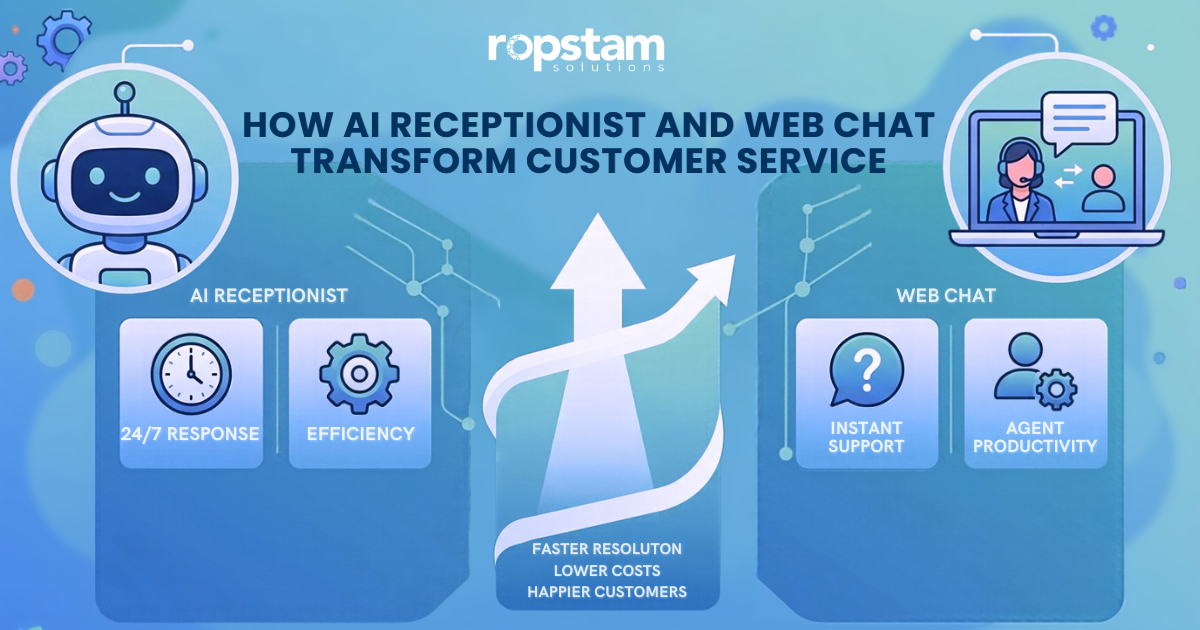
So use a simple example. Imagine a customer service team that gets 5,000 emails and chat messages every single day. With a human team, you need dozens of employees working in shifts to respond to all those messages. And even then, some customers wait hours or days for a reply.
With an AI agent, things look very different. The agent can:
- Read and understand every message instantly
- Respond to simple questions automatically
- Forward complicated issues to the right human team member
- Learn from past conversations to get better over time
- Work 24 hours a day, 7 days a week, without taking a break
The result? Faster responses, happier customers, and a much smaller team needed to manage the whole operation.
Now multiply that kind of efficiency across every department in a company finance, HR, marketing, operations, IT and you begin to see just how powerful this becomes.
Will AI Agents Take Away Human Jobs?
This is probably the question most people are thinking about right now. And it is a fair one.
The honest answer is: AI agents will change jobs, but they are more likely to change what people do rather than eliminate people entirely.
Here is how to think about it. Before calculators existed, accountants spent most of their time doing arithmetic by hand. The calculator did not make accountants useless it freed them to focus on higher-level thinking, analysis, and strategy. AI agents are doing something very similar, but on a much bigger scale.
When AI agents take over repetitive, boring, and time-consuming tasks, employees get to focus on things that truly need a human touch:
- Creative thinking and coming up with new ideas
- Building relationships with customers and partners
- Making judgment calls in difficult or sensitive situations
- Leading teams and inspiring people
- Strategic planning for the future of the business
In fact, many companies are now investing in training their employees to work alongside AI agents not compete with them. The future of work is about humans and AI working as a team, each doing what they do best.
Making Sense of Data Like Never Before
Every business today is swimming in data. Customer data. Sales data. Website data. Financial data. The list goes on. But having data and actually using it well are two very different things.
Most businesses collect far more data than they can actually process and act on. Important insights get buried. Opportunities get missed. Problems go unnoticed until it is too late.
AI agents solve this problem beautifully. They can:
- Collect data from multiple sources at once
- Clean and organize messy data automatically
- Spot patterns and trends that humans might never notice
- Generate clear, easy-to-read reports and summaries
- Take action based on what the data shows right away
For example, if an AI agent notices that a product is selling much faster than expected, it can automatically order more stock, update the website, alert the sales team, and adjust the marketing budget all before a human even looks at the sales report.
This kind of smart, real-time data management gives businesses a huge advantage. They are no longer reacting to what happened last week. They are responding to what is happening right now. See this example here.

Challenges You Need to Know About
- Of course, no technology is perfect, and AI agents come with their own set of challenges. Being aware of these helps businesses plan better.
- Connecting with old systems: Many companies still use older software and systems that were not built to work with AI. Getting AI agents to work smoothly with these old systems can be difficult and expensive.
- Keeping data safe: AI agents often need access to sensitive information to do their jobs. Companies must make sure that this data is protected and that agents only access what they are supposed to.
- Avoiding bias: AI systems can sometimes make unfair decisions if they were trained on biased data. It is important to regularly check and correct this.
- Getting employees on board: Some employees may feel nervous or threatened by AI agents. Clear communication and proper training go a long way in helping people embrace the change rather than resist it.
- Following the rules: Depending on the industry, there may be strict regulations about how data can be used and how decisions can be made. AI agents must be set up to follow these rules carefully.
- None of these challenges are impossible to overcome. But they do require careful planning, the right expertise, and a commitment to doing things responsibly.
How to Get Started: A Simple Roadmap
If you are a business owner or leader thinking about using AI agents, here is a simple step-by-step approach to get started:
- Step 1 — Identify a problem: Start by picking one specific problem in your business that AI could help solve. Do not try to change everything at once.
- Step 2 — Check your foundation: Make sure your data is clean, organized, and accessible. AI agents need good data to work properly.
- Step 3 — Start small: Run a pilot test with your chosen AI agent in a controlled environment. See how it performs and what needs to be improved.
- Step 4 — Measure the results: Track how much time is saved, how accuracy improves, and how costs change. Real numbers help build confidence in the technology.
- Step 5 — Expand gradually: Once your pilot works well, slowly roll out the agent to other areas of the business. Add more agents as you grow more comfortable.
- Step 6 — Keep improving: AI agents get better over time, especially when you give them feedback and new data. Commit to ongoing learning and optimization.
Why Acting Now Gives You an Edge Over Competitors
- Here is something important to understand. The businesses that start using AI agents today are building a serious advantage over those that wait.
- Early adopters are learning faster, making fewer mistakes, and developing the internal skills needed to get the most out of this technology. By the time slower businesses decide to catch up, the gap will be enormous.
- Think about it like smartphones. The companies that built smartphone-friendly strategies early — think of apps, mobile shopping, digital payments — dominated their industries. Those that waited too long were left scrambling to catch up.
- AI agents represent a similar turning point. The window to get ahead is open right now, but it will not stay open forever.
The Exciting Future Ahead
What we are seeing today is just the beginning.
AI agents are going to get much more powerful in the coming years. They will be able to handle more complex decisions, communicate with each other to collaborate on big projects, and manage entire business operations with very little human input.
Imagine a future where a network of AI agents manages your entire supply chain from placing orders with suppliers to delivering products to customers while another set of agents handles marketing, customer service, and financial reporting simultaneously. And all of this happens while you focus on strategy and growth.
This is not a distant dream. It is already starting to happen in many forward-thinking companies around the world.
Let’s Build Your AI-Powered Future Together
You’ve seen what AI agents can do. Now imagine what they could do for your business handling your repetitive tasks, analyzing your data in real-time, and freeing your team to focus on what humans do best.
We’ve helped dozens of companies successfully implement AI agents, and we’d love to show you how it works.
Assess your current processes
Identify quick wins with AI automation
Create a custom roadmap for your business
Conclusion
- Digital transformation is about changing how businesses operate for the better. And autonomous AI agents are proving to be the most powerful tool available to make that transformation faster, smarter, and more impactful.
- They are not just for big tech companies or billion-dollar corporations. Businesses of all shapes and sizes can benefit from using AI agents — whether it is automating customer emails, managing inventory, or analyzing sales data.
- The key is to start with the right mindset: see AI agents as a partner, not a threat. Use them to lift the burden of repetitive tasks off your team. Use them to make faster and smarter decisions. Use them to stay one step ahead of the competition.
- The future belongs to businesses that embrace intelligent technology with confidence and purpose. And that future is already here.