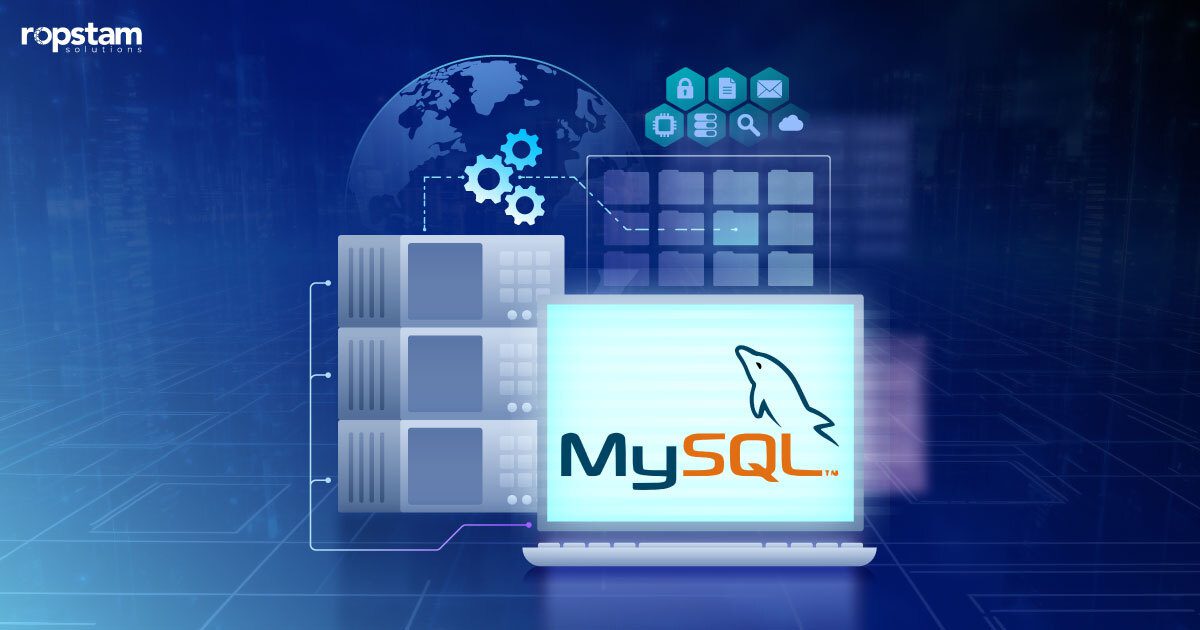
MySQL is one of the most well-known options for developers and businesses in the wide world of database management systems. It is a reliable option that keeps growing. Why should one use MySQL for managing databases is a frequently asked question by software developers. This blog will detail MySQL’s definition, benefits, drawbacks, and features. By the end, we will know why so many people still use MySQL as their preferred Database Management System (DBMS).
What is MySQL?
MySQL is an open-source relational database management system. It was initially developed by a Swedish company, MySQL AB, and later acquired by Sun Microsystems in 2008. In 2010, Oracle Corporation acquired Sun Microsystems, inheriting MySQL as part of the deal.
Despite these corporate transitions, MySQL has continued to thrive as an open-source project. MySQL uses a client-server model, where the database server manages and controls the data, and clients can interact with it using various programming languages, making it a versatile choice for developers.
Its name combines “My,” the name of co-founder Michael Widenius’s daughter, and “SQL,” denoting the structured query language that MySQL employs for database manipulation.
Advantages and disadvantages of MySQL
Pros:
- Known for high-speed data processing.
- Freely available and customizable.
- Popular, with a large supportive community.
- Active forums and extensive documentation.
- Works on various operating systems.
- Handles large data sets and scales well.
- Supports replication for backup and high availability.
- Offers user authentication, access controls, and encryption.
Cons:
- Management can be complex, requiring experienced administrators.
- Some features are exclusive to the commercial version.
- Engine choices may impact functionality.
- Uses table-level locking, leading to contention.
- Past changes in ownership have raised concerns.
Advantages
Open source and cost-effective
MySQL is open-source, making it freely available for use, modification, and distribution. This makes it a cost-effective solution, particularly attractive for startups and small to medium-sized enterprises operating on tight budgets.
Scalability
MySQL is known for its scalability, allowing businesses to expand their databases as their requirements grow smoothly. Whether you’re managing a small-scale application or an extensive enterprise system, MySQL can scale to meet your needs.
Community support
The MySQL community is vast and active, providing many resources for troubleshooting and problem-solving. The community support includes forums, documentation, and contributions from developers worldwide, fostering a collaborative environment.
Cross-platform compatibility
MySQL is compatible with various operating systems, including Windows, Linux, and macOS. This flexibility ensures developers can work with MySQL across different platforms, enhancing its usability in diverse environments.
High performance
MySQL is optimized for speed and high performance, making it suitable for applications that demand quick and efficient data retrieval and processing. Its indexing mechanisms and caching features contribute to its impressive performance metrics.
Reliability and durability
Known for its reliability, MySQL ensures data integrity and durability. It supports ACID (Atomicity, Consistency, Isolation, Durability) properties, guaranteeing the dependability of transactions even in the face of system failures.
Security features
MySQL incorporates robust security features, including encryption, user authentication, and access control. These features help protect sensitive data and ensure that only authorized users can access and modify information within the database.
Wide range of storage engines
MySQL supports multiple storage engines, such as InnoDB, MyISAM, and more. Each engine has its strengths and weaknesses, allowing users to choose the one that best aligns with their specific requirements, whether for performance, transactions, or full-text searching.
Disadvantages
Despite its numerous advantages, MySQL does have certain limitations and challenges:
Lack of some advanced features
MySQL may need some of the advanced features found in other database management systems. While it covers the essentials, organizations with highly specialized needs might find other solutions more suitable.
Limited support for complex transactions
MySQL may need to improve its handling of complex transactions compared to some enterprise-level database systems. While it performs well in many scenarios, other DBMS options might better address specific intricate transactional requirements.
Single master replication
MySQL traditionally uses a single-source replication setup, which might pose challenges in scenarios where high availability and fault tolerance are critical. More modern databases often offer more sophisticated replication mechanisms.
Features of MySQL
Data types
MySQL supports many data types, including integers, floating-point numbers, strings, and date/time types. This flexibility allows developers to represent various data structures efficiently.
Indexing
Efficient indexing mechanisms in MySQL enhance query performance by enabling faster data retrieval. Developers can choose from different types of indexes based on their specific use cases.
Stored procedures and triggers
MySQL supports the creation of stored procedures and triggers, allowing developers to encapsulate business logic within the database. It enhances modularity and simplifies maintenance.
Full-text search
The full-text search capabilities in MySQL enable users to search for specific words or phrases within large text fields, making it suitable for applications that require extensive text processing.
ACID compliance
MySQL adheres to the ACID properties, ensuring the consistency and reliability of transactions. It is crucial for applications where data integrity is paramount.
Partitioning
MySQL supports partitioning large tables into smaller, more manageable pieces. It can significantly improve query performance for large datasets.
Replication
MySQL provides replication features, enabling the duplication of databases for backup purposes or for distributing the workload across multiple servers. It contributes to high availability and fault tolerance.
3 Tips On Enhancing MySQL Performance
Today, MySQL is a staple for nearly every open-source web application, offering compatibility with various hosting providers and user-friendly functionality. If your web application or e-commerce site is experiencing performance issues, consider these three effective tips:
Performance optimization
Enhance your web application’s performance by fine-tuning high-availability proxies like HAProxy. Utilize updated load-balancing software to optimize your database and accelerate server speed. Database load-balancing software provides agility and scalability, meeting unplanned performance demands in the future.
Query optimization
While database optimization tools address server load, effective coding is crucial for optimal performance. SQL server load-balancing software offers a comprehensive solution for uptime maintenance, data consistency, performance enhancement, and cost reduction. It ensures continuous availability, runs health checks, reduces query wait times, and evenly distributes the load across multiple servers for an enhanced customer experience.
Security assessments
Guard against database server disruptions caused by denial-of-service (DoS) attacks and spamming through robust load-balancing software. Ensure automatic failover and timely security updates to prevent performance issues and enhance uptime.
Summary
MySQL is the ideal choice, blending open-source cost-effectiveness with robust database management capabilities. Its scalability, performance, and vibrant community support make it versatile for any application. While not without limitations, MySQL’s advantages far exceed its drawbacks, ensuring enduring relevance.
For finely crafted solutions in mobile app and website development, you can trust Ropstam Solutions. Enhance your online presence with our innovative and customized services. Contact us right away to make your concept a reality.