
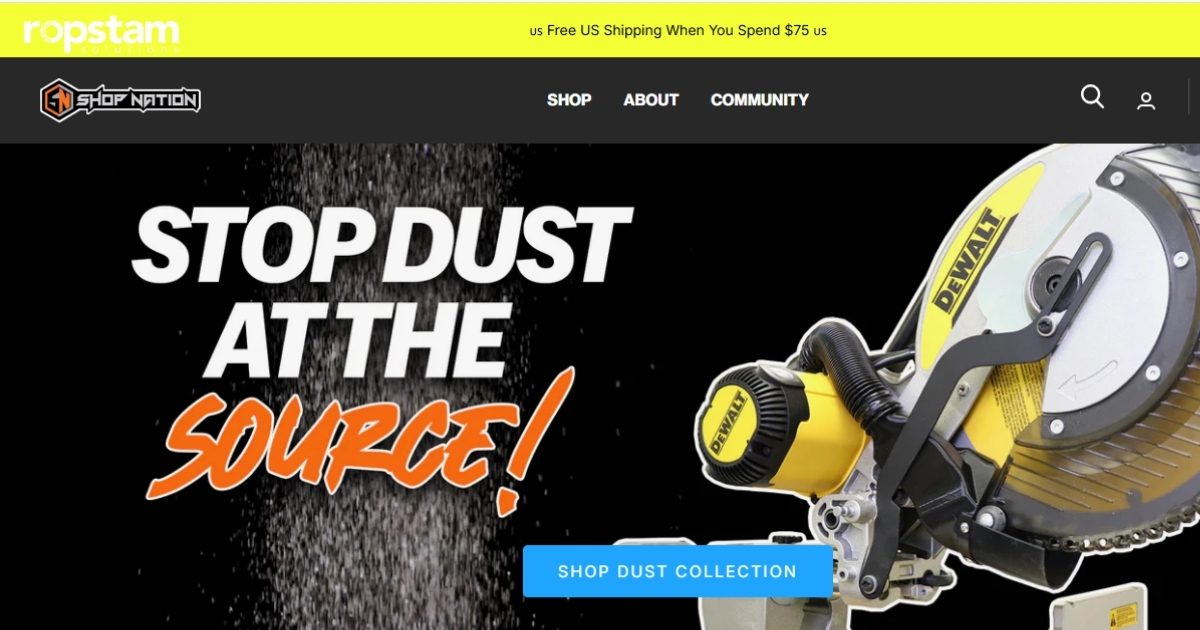
In today’s competitive e-commerce space, users decide within seconds whether to stay on a website or leave. Design is no longer just about looks—it directly affects how users browse, trust, and purchase. This is where thoughtful UI/UX design becomes a powerful driver of conversions. The ShopNation UI/UX design journey is a strong example of how intelligent design choices can turn an idea into a successful digital store.
ShopNation began as a YouTube channel focused on building the perfect workshop. Over time, it evolved into a full-scale online marketplace offering high-quality furniture and tools. As demand grew, the client needed a platform that was easy to use, secure, and reliable for both customers and vendors. The goal was clear: create a smooth shopping experience that reduces friction and builds trust.
Our team approached this project with a user-first mindset. Every design decision was made to guide users naturally from product discovery to checkout. By focusing on clarity, performance, and accessibility, the platform improved engagement and reduced drop-offs.
This blog explores how ShopNation’s UI/UX design choices improved conversion rates, the challenges it faced, and the solutions implemented. It also highlights how thoughtful design, paired with the right technology, can create meaningful results for modern e-commerce businesses.
About ShopNation
ShopNation is a digital marketplace offering carefully curated furniture and tools for workshops and home spaces. What started as a content-driven brand transformed into a scalable e-commerce platform built for growth.
The platform was developed using:
- Shopify is the core e-commerce engine
- React.js for a fast and responsive front end
- Node.js for backend services
- PostgreSQL for reliable data management
This combination ensured performance, flexibility, and a smooth user experience across devices.
The Challenge: Creating a Hassle-Free Shopping Experience
ShopNation aimed to solve common problems found in many online marketplaces:
- Complicated navigation
- Limited payment options
- Trust and security concerns
- Poor vendor and inventory management
Users often abandon carts when the buying journey feels confusing or slow. Vendors struggle when dashboards are complex or unclear. The challenge was to design a platform that worked equally well for customers and sellers while remaining reliable and straightforward.
The Solution: User-Centered UI/UX Design
To address these challenges, the team focused on clarity and ease of use. The solution combined strong UI/UX design with robust e-commerce features.
Key features included:
- Secure payment gateway integration
- Multi-vendor marketplace support
- Inventory and order management
- Search and filtering functionality
- Social media and store integrations
Each feature was designed to reduce effort and guide users naturally through the platform.
Discovery and Planning
Before design and development began, the team followed a structured discovery phase. This involved:
- Understanding user behavior
- Mapping customer and vendor journeys
- Identifying friction points
- Defining conversion goals
This phase ensured that real needs rather than assumptions backed design decisions.
Designing & Wireframing for Better Conversions
Wireframes were created using Figma and Adobe XD to plan layouts before development. This helped visualize how users would interact with the platform.
Key UI/UX decisions included:
- Clean and distraction-free layouts
- Clear product categories and navigation
- Strong visual hierarchy for calls to action
- Simple checkout flow
By reducing visual clutter and highlighting necessary actions, users could move faster toward purchase decisions.
Search and Product Discovery Experience
One of the most critical conversion factors was product discovery. The team focused on:
- Fast and accurate search results
- Easy-to-use filters
- Clear product descriptions and images
Users could quickly find what they were looking for, compare options, and feel confident in their choices.
Checkout Flow and Payment Experience
A complex checkout process is a significant cause of cart abandonment. ShopNation’s checkout was designed to be:
- Short and clear
- Secure and transparent
- Supportive of multiple payment methods
Security cues and smooth transitions helped build trust at the most critical stage of the buying journey.
Vendor Dashboard UX
ShopNation is a multi-vendor marketplace, so vendor experience mattered just as much as customer experience.
The vendor dashboard allowed sellers to:
- List products easily
- Manage inventory
- Track orders and shipping
Clear layouts and simple workflows reduced errors and improved efficiency.
Testing and Deployment
Once development was complete, the platform underwent thorough testing:
- Cross-browser and device testing
- Performance and load testing
- UI consistency checks
This ensured a smooth experience across desktops, tablets, and mobile devices before launch.
Results: What Was Delivered
The final solution delivered:
- A fully functional Shopify-based multi-vendor store
- Improved user engagement and smoother navigation
- Secure payment and order management systems
- A scalable platform ready for future enhancements
ShopNation continues to grow with regular updates and feature improvements.
Reference: ShopNation Case Study
For a deeper look at the whole development journey, explore the complete ShopNation case study, which outlines the technical approach, challenges, and outcomes in detail. You can also visit the live platform.
Conclusion
The success of ShopNation highlights the direct connection between UI/UX design and conversion rates. By focusing on user needs, reducing friction, and creating clear pathways, the platform transformed browsing into buying. Every design choice—from navigation to checkout—played a role in building trust and encouraging action.
For customers, the experience feels secure and straightforward. Products are easy to find, information is clear, and checkout is smooth. For vendors, dashboards are intuitive, making product and order management efficient. This balance between customer and vendor experience is key to building a sustainable marketplace.
From a development perspective, the project shows the value of combining strong UI/UX design with a modern tech stack. Shopify, React, Node.js, and PostgreSQL provided the foundation, but it was thoughtful design that turned technology into results.
For businesses planning e-commerce platforms, ShopNation offers a clear lesson: conversion growth starts with understanding users. Investing in UI/UX is not an extra step—it is a core business strategy. When design decisions are intentional and user-focused, they drive engagement, trust, and long-term success.
The ShopNation UI/UX design journey proves that when design and technology work together, digital platforms can deliver both great experiences and measurable business value.
FAQs
- What role did UI/UX play in ShopNation’s success?
It reduced friction and guided users smoothly toward purchases. - How did design improve conversion rates?
Clear navigation and simple checkout helped users complete actions faster. - Was ShopNation built for vendors as well?
Yes, it includes an easy-to-use vendor dashboard. - What technologies supported the UI/UX design?
Shopify, React.js, Node.js, and PostgreSQL. - Why is ShopNation UI/UX design important for e-commerce?
It builds trust, improves engagement, and increases conversions.