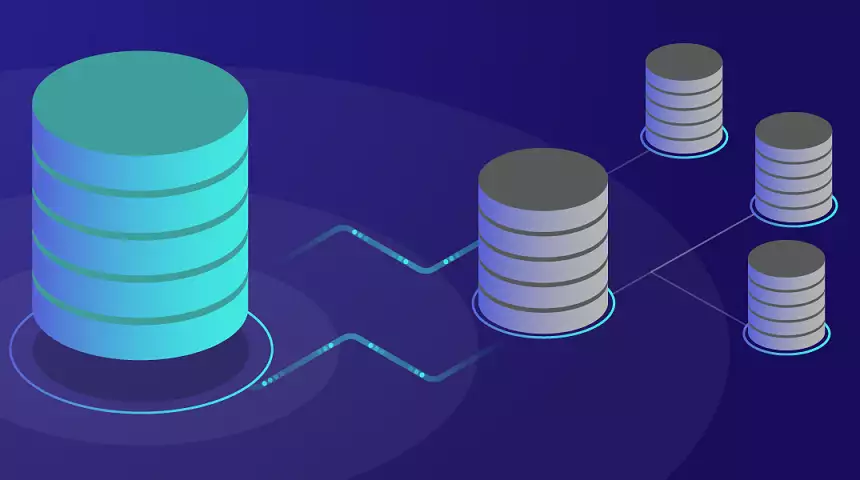
Selecting the most suitable Database Management System (DBMS) can significantly impact the success of your application. Among the top contenders in this realm are SQL (relational) and NoSQL (non-relational) databases. In this comprehensive comparison, we delve into the world of SQL vs NoSQL, carefully weighing their respective advantages and disadvantages.
The analysis spans crucial factors like scalability, flexibility, complexity, and performance, allowing you to make an informed decision on which database technology aligns best with your project’s requirements. Whether it’s the structured reliability of SQL or the flexible dynamism of NoSQL, by the end of this exploration, you’ll be equipped with the knowledge needed to choose between SQL and NoSQL for your next venture confidently.
What is the difference between SQL and NoSQL?
- SQL has predefined schemas while NoSQL has dynamic schemas
- SQL databases are relational while NoSQL databases are non-relational
- SQL scales vertically, NoSQL scales horizontally
- SQL supports ACID transactions while NoSQL has eventual or tunable consistency
- SQL offers better support for complex queries while NoSQL is faster for simple queries
- SQL works well with structured data while NoSQL handles unstructured data better
What are SQL databases?
SQL (Structured Query Language) databases have reigned as the predominant choice for relational database (RDBMS) since the 1980s. These databases store data in structured tables with predefined schemas and relationships, making them ideal for applications that require data consistency and well-defined structures.
Database engineers and analysts leverage the power of SQL clients to manage and interact with databases effectively. Also, SQL query language uses transactions and embedded procedures like stored functions or views to apply complex logics
Moreover, SQL databases excel in maintaining data integrity through features like ACID (Atomicity, Consistency, Isolation, Durability) transactions. However, they may face challenges with scalability, particularly when dealing with vast datasets, and are perceived as less flexible than their NoSQL counterparts. Their fixed schema can make adapting to evolving data needs a more intricate process.
While some confuse MySQL with SQL database, it is pertinent to mention that the former is a powerful database management system for businesses and development projects.
Let’s dig into the pros and cons of SQL database systems:
Pros of SQL database:
- Structured data with strict schemas
- Advanced data integrity features
- Mature technology with universal standards
- Support complex queries and analytics
- Transactional consistency and ACID compliance
- Vertical scalability with increased server power
Cons of SQL database:
- Schema changes require altering tables
- Less flexibility in data structures
- Scaling out across servers is challenging
- Data volume and velocity limitations
- Not ideal for unstructured or hierarchical data
What are NoSQL databases?
NoSQL databases have emerged as flexible and horizontally scalable alternatives to traditional relational databases. They offer versatility in data storage, allowing for various data models, including key-value, document, wide-column, and graph databases. This diversity enables NoSQL databases to excel in scenarios where data structures are complex, evolving, or not well-suited for a tabular format.
Furthermore, such databases are particularly strong in handling unstructured or semi-structured data. However, this versatility may come at the cost of consistency, as NoSQL databases may not always provide the same level of data integrity as SQL databases. Additionally, querying in NoSQL databases can be less standardized, posing a potential learning curve for developers accustomed to SQL.
Let’s expand the SQL vs NoSQL debate by evaluating the pros and cons of NoSQL databases:
Pros of NoSQL database:
- Flexible schemas and data models
- Easy horizontal scaling across distributed servers
- High performance for large volumes of data
- Fast iterations and ability to evolve data structures
- Capable of handling unstructured, semi-structured, and polymorphic data
Cons of NoSQL database:
- Less mature standards and tooling
- Weaker data integrity and lack of ACID transactions
- Requires more database administration skills
- Querying and reporting are more complex
- Analytics capabilities lag relational databases
Differences between SQL and NoSQL – Feature-wise comparison for better understanding
Now that you are familiar with the definition as well as the pros and cons of both types of databases, it’s time to delve further into the SQL vs. NoSQL debate by comparing their attributes and features:
| Aspect | SQL | NoSQL |
| 1. Full Form | Structured Query Language (SQL) |
Not Only SQL (NoSQL)
|
| 2. Examples | Microsoft SQL Server, MySQL, PostgreSQL, SQL Server, Oracle |
Redis, MongoDB, Couchbase, Cassandra, Amazon DynamoDB
|
| 3. Data Type | Best for structured data with predefined schema |
Best for unstructured and semi-structured data
|
| 4. Data Security | Have more mature security features for authentication & authorization | Security features vary by NoSQL database & may require additional configurations |
| 5. Data Structure | Normalized data structure is used |
Denormalized data structure is used
|
| 6. Transaction Management | Follows ACID (Atomicity, Consistency, Isolation, Durability) properties |
Does not mainly follow ACID properties
|
| 7. Support for JOIN and Complex Queries | Supports JOIN and complex queries |
Does not support JOIN and complex queries
|
| 8. Data Storage | Store data in tables with rows and columns | Store data in documents or collections |
| 9. Scaling | Needs vertical scaling to handle large volumes of data |
Horizontal scaling is possible to handle large volumes of data
|
| 10. Database Management System Type | Relational Database Management System (RDBMS) | Non-relational Database Management System |
1) Scalability:
SQL databases primarily achieve scalability through vertical scaling, which involves upgrading server hardware, often leading to costlier solutions. In contrast, NoSQL databases excel in horizontal scalability, distributing data across multiple commodity servers. This approach is more cost-effective and accommodates growth by simply adding more servers.
2) Flexibility:
SQL databases demand predefined, rigid schemas that outline the structure of your data. On the other hand, NoSQL databases offer greater flexibility, permitting schemas to evolve over time. This adaptability is especially advantageous when dealing with dynamic or semi-structured data, as the database can accommodate changes without the need for major schema adjustments.
3) Complexity:
SQL databases are well-known for their established standards and normalized data models, providing a relatively straightforward and standardized way of managing data. NoSQL databases, on the other hand, often require more administrative experience, as they can encompass diverse data models and may not follow uniform schemas.
4) Structured vs. Unstructured Data:
SQL databases are optimized for structured data consisting of well-organized, tabular information. NoSQL databases shine when handling unstructured or semi-structured data. Their flexible data models and ability to store diverse data types make them an excellent choice for managing complex and varied information.
5) Analytics:
SQL databases offer advanced querying, aggregation, and reporting capabilities, which are essential for applications that demand complex data analysis and reporting. When it comes to NoSQL databases, they generally provide more limited analytics features and may require additional tools or integration to achieve sophisticated data analysis.
6) Transactions:
SQL databases follow ACID (Atomicity, Consistency, Isolation, Durability)-compliant transactions, which ensure data consistency and reliability. NoSQL databases, on the other hand, often offer eventual consistency or tunable consistency, which may prioritize performance over strict data consistency.

7) Performance:
NoSQL databases tend to outperform SQL databases when handling high volumes of simple data requests. They are particularly efficient for read-heavy workloads and can swiftly retrieve a single or a small number of records.
SQL databases, meanwhile, excel in managing complex querying and are often the preferred choice for applications with intricate data retrieval and analysis requirements.
8) Security:
SQL databases typically implement robust security measures, including role-based access control, encryption, and authentication protocols. NoSQL databases may offer security features, but they vary in their level of sophistication. Depending on the NoSQL database type, you may need to rely on additional security mechanisms to achieve the desired protection.
9) Consistency Models:
SQL databases provide strong consistency through ACID transactions. In contrast, NoSQL databases may employ various consistency models, such as eventual consistency, causal consistency, or strong consistency. The choice of a consistency model is essential to align the database with your application’s data integrity requirements.
10) Use of Joins:
SQL databases often rely on complex SQL queries with joins to retrieve related data from multiple tables. This approach is beneficial for applications that involve intricate data relationships. On the contrary, NoSQL databases tend to de-normalize data, avoiding joins and simplifying data retrieval, potentially leading to data duplication or inconsistency.
When should you use SQL?
SQL databases work well in many traditional business applications with predefined data structures, cross-table queries, and transactional integrity needs. Some of the most common use cases well-suited for SQL include:
- Banking and finance systems
- Retail and ecommerce platforms
- Government, Healthcare, and Enterprise IT systems
- Content management and document archives
- Legacy business systems and data warehouses
- Any system requiring ACID compliance
When should you use NoSQL?
The use cases of NoSQL databases include:
- High-scalability web and mobile apps
- Gaming and ad-tech platforms with big-data volumes
- IoT and real-time analytics applications
- Rapid prototyping and agile development
- Media streaming and social networking platforms
- Personalization and recommendations engines
- Data lakes and other unstructured data repositories
Conclusion
To summarize, both SQL and NoSQL databases have their respective strengths and weaknesses based on data structures, use cases, scalability needs, and other factors. SQL remains a mature, versatile, and ubiquitous database technology powering many transactional business systems. But NoSQL offers advantages for data-intensive, real-time web and mobile applications by removing schema limitations.
In some cases, leveraging both SQL and NoSQL in a polyglot persistence architecture can provide the best of both worlds. By understanding the key differences outlined in this SQL vs NoSQL comparison, you can make an informed decision based on your project needs.
At Ropstam Solutions, we have a team of skilled web and mobile app developers who smoothly integrate their projects with databases. Over more than a decade, we have created a legacy of delivering high-quality projects on time with all the requirements. If you are interested in our services, contact us now.