The rise of the Autonomous AI Agent is changing how enterprises operate in 2026. Businesses are no longer relying only on automation tools that follow fixed rules. Instead, they are adopting intelligent systems that can think, decide, and act independently. This shift is helping companies move faster, reduce costs, and improve efficiency across departments.
An Autonomous AI Agent goes beyond basic automation. It can analyze data, plan tasks, and execute actions without constant human input. From customer service to operations and finance, these agents are becoming a key part of modern enterprise systems. They work through agentic workflows, collaborate in multi-agent systems (MAS), and form what many now call an autonomous digital workforce.
For mobile app development companies, this evolution creates new opportunities to build smarter, scalable, and more adaptive applications. Enterprises are looking for solutions that not only respond but also act. This blog explores the most impactful use cases of intelligent AI agents in 2026, their business value, and how organizations can adopt them effectively. Ready to build smarter, AI-powered mobile solutions? Get in touch with our experts to turn your idea into an intelligent application today.
What Is an Autonomous AI Agent?
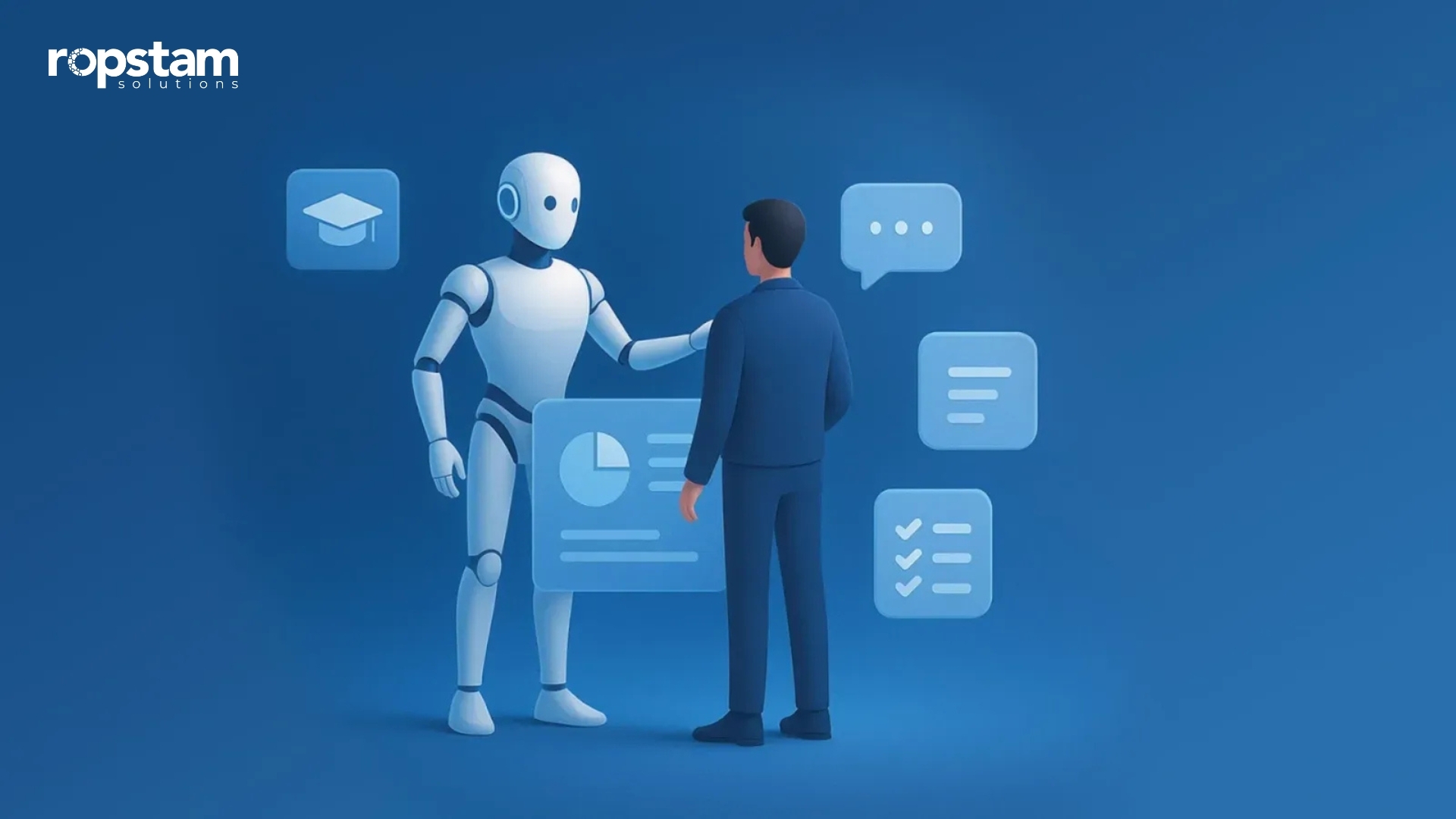
An Autonomous AI Agent is a software system designed to perform tasks independently, without constant human oversight. Unlike traditional software or basic AI assistants, these agents can make decisions, execute actions, and adapt to changing environments based on real-time data. They are built to handle complex workflows, collaborate with other systems, and achieve specific objectives with minimal manual intervention.
In enterprise settings, smart automation tools are increasingly used to streamline operations, reduce errors, and enhance efficiency. For example, they can manage repetitive tasks, monitor systems for anomalies, or even interact with customers and internal teams through automated processes. These agents leverage agentic workflows, where each agent is assigned clear responsibilities, and multi-agent systems (MAS), enabling several agents to work together toward larger goals.
The business value of smart automation tools is clear: they save time, reduce operational costs, and improve decision-making accuracy. Unlike traditional AI chatbots or scripts, they are proactive and can adapt to dynamic scenarios, making them ideal for enterprises aiming to stay competitive in the fast-evolving digital landscape.
To learn more about how AI agents function and their potential applications, check out this complete beginner’s guide to AI agents.
Why Enterprises Are Adopting Autonomous AI Agents
Enterprises today face unprecedented pressure to move faster, reduce costs, and improve outcomes. Traditional automation and static software solutions are no longer sufficient to meet the demands of complex, dynamic business environments. This is where these AI Agents come in, offering a new level of intelligent automation capable of making decisions, executing tasks, and collaborating across systems without constant human intervention.
Several key factors are driving adoption:
- Need for real-time decision making: Businesses require instant insights and responses to changing conditions, from supply chain fluctuations to customer behavior shifts.
- Rising operational costs: Automating complex workflows reduces human error and minimizes labor-intensive tasks, saving money.
- Demand for personalized customer experiences: AI agents can tailor interactions, recommend products, and resolve issues proactively.
- Complex workflows across systems: Enterprises increasingly rely on multiple applications; autonomous agents integrate seamlessly to manage these workflows efficiently.
Industry research highlights this trend. Gartner predicts that by the end of 2026, 40% of enterprise applications will feature task-specific AI agents, a dramatic rise from less than 5% in 2025. This shift reflects the growing importance of intelligent, autonomous solutions that can act decisively while driving business efficiency and innovation.
From Automation to Agentic Workflows
As enterprises embrace AI, the shift is moving from simple automation to agentic workflows, where intelligent systems can manage tasks end-to-end with minimal human input. Unlike traditional automation, which relies on predefined rules and sequential processes, agentic workflows empower AI agents to adapt dynamically based on real-time data and context.
What Are Agentic Workflows?
Agentic workflows are designed to give AI agents the authority to make decisions, adjust processes, and execute actions autonomously. This means that instead of simply following fixed instructions, the system can evaluate multiple factors, learn from outcomes, and optimize performance continuously.
How They Differ from Traditional Automation:
- Traditional Automation: Executes repetitive tasks based on fixed rules; limited flexibility and requires human intervention for exceptions.
- Agentic Workflows: Adapts in real-time, analyzes changing data, and takes autonomous action to meet objectives efficiently.
By adopting agentic workflows, enterprises can respond instantly to changes, reduce bottlenecks, and improve operational efficiency. For example, in a supply chain, agentic AI can automatically reroute shipments based on delays, while traditional automation would require human decision-making. This adaptability not only increases speed but also enhances the accuracy, reliability, and responsiveness of enterprise operations, making businesses more resilient and competitive in fast-changing markets.
Use Case 1: How Autonomous AI Agents Transform Customer Support
Customer service is one of the fastest-growing areas benefiting from these AI Agents. These agents can resolve customer queries independently, managing multi-step conversations without human intervention. By understanding context, they can provide accurate responses, suggest solutions, and guide users through processes. Human agents are only involved for complex or exceptional cases, reducing workload and response times. This not only improves customer satisfaction but also lowers operational costs. Enterprises implementing autonomous agents in support can ensure 24/7 service availability, faster resolution, and a consistent, personalized customer experience across multiple channels, transforming the way businesses engage with their users.
Compared to traditional bots, agents can understand context better. Learn more about chatbot evolution here.
Use Case 2: Intelligent Sales and CRM Automation
AI Agents are transforming how sales teams operate by providing real-time insights and actions. These agents can qualify leads automatically based on behavior and engagement, ensuring sales teams focus on high-potential prospects. They can also send automated follow-ups, schedule meetings, and nurture leads without manual effort. By analyzing customer data, agents enable personalized outreach, tailoring messages to individual preferences and needs. This results in higher conversion rates, improved pipeline efficiency, and more predictable sales outcomes. Enterprises leveraging autonomous agents for sales can accelerate growth while reducing repetitive administrative tasks.
Agents can analyze customer behavior and take action instantly.
Use Case 3: Autonomous Digital Workforce in Operations
The concept of an autonomous digital workforce is becoming real.
What It Means
- AI agents act as virtual employees
- Handle repetitive and complex tasks
- Work 24/7 without downtime
Business Impact
- Reduced operational cost
- Faster execution
- Improved consistency
Use Case 4: Multi-Agent Systems (MAS) in Enterprise Apps
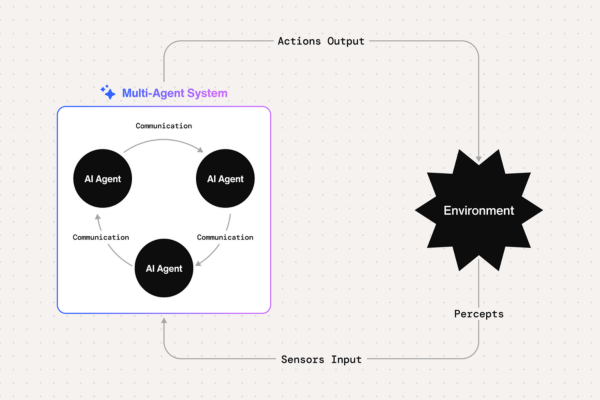
What Are Multi-Agent Systems (MAS)?
These are networks of multiple AI agents working together.
Example
- One agent collects data
- Another analyzes
- A third executes actions
According to Forrester, 30% of enterprise vendors will adopt systems enabling agent communication by 2026.
Use Case 5: Finance and Risk Management
Finance teams need accuracy and speed.
How Agents Help
- Fraud detection
- Expense validation
- Risk analysis
Agents can monitor transactions in real time and flag issues instantly.
Use Case 6: HR and Talent Management
HR processes are becoming more automated.
Applications
- Resume screening
- Interview scheduling
- Employee onboarding
Agents improve hiring speed and reduce manual workload.
Use Case 7: Supply Chain Optimization
Supply chains are complex and dynamic.
Agent Capabilities
- Demand forecasting
- Inventory management
- Route optimization
These systems adapt to disruptions quickly.
Traditional Chatbots vs. 2026 Autonomous Agents
| Feature | Traditional Chatbots | 2026 Autonomous AI Agents |
| Decision Making | Rule-based | Context-aware |
| Task Handling | Single-step | Multi-step workflows |
| Learning Ability | Limited | Continuous learning |
| Integration | Basic | Deep system integration |
| Autonomy | Low | High |
Business Value
Enterprises investing in these systems see measurable results.
Key Benefits
- Faster decision-making
- Reduced operational costs
- Improved customer experience
- Higher scalability
- Better resource utilization
According to McKinsey, 92% of enterprises are increasing AI investment, focusing on systems that act, not just respond.
Challenges and Considerations
Adopting autonomous systems comes with challenges.
Key Concerns
- Data privacy
- System reliability
- Integration complexity
- Trust and control
Businesses must implement strong governance and monitoring systems.
Internal Knowledge Building
To understand the basics of AI agents, explore this guide:
https://www.ropstam.com/what-are-ai-agents-a-complete-beginners-guide-2026/
How Mobile App Development Companies Can Lead
Mobile app development companies are uniquely positioned to drive the shift toward autonomous AI-driven solutions. As businesses increasingly demand intelligent, adaptive platforms, these companies can help bridge the gap between traditional static apps and dynamic, self-operating systems.
One major opportunity lies in building AI-powered mobile apps that can anticipate user needs, automate repetitive tasks, and provide personalized experiences in real time. By leveraging AI agents, these apps can act proactively rather than reactively, transforming the way users interact with digital platforms.
Another avenue is the integration of agentic workflows, enabling apps to handle complex processes autonomously. Mobile apps can orchestrate multiple tasks simultaneously, communicate with other systems, and adapt their actions based on changing conditions, reducing the need for constant human supervision.
Additionally, development companies can focus on enterprise-grade solutions that combine security, scalability, and multi-agent system capabilities. This empowers organizations to deploy autonomous digital workforces across various functions, from customer service to operational management.
By embracing these opportunities, mobile app development companies can help businesses evolve from static applications to intelligent, self-managing platforms, driving efficiency, innovation, and competitive advantage in the rapidly changing digital landscape.
Stay Ahead with AI-Powered Solutions
Enterprises are rapidly embracing intelligent automation, and the future favors those who act now. Partner with Ropstam Solutions to build scalable, secure, and future-ready applications powered by autonomous AI systems. Our expert team combines deep technical expertise with industry best practices to transform your ideas into intelligent platforms that drive efficiency, innovation, and measurable business value.
In 2026, the narrative has shifted from “AI as a chatbot” to “AI as an operator.” Here are real-world examples of companies using AI agents to transform their business models.
1. Klarna: The “Efficiency” Pioneer
Klarna made waves by replacing a massive portion of its workforce with a specialized AI agent.
- The Stats: Their AI assistant (developed with OpenAI) does the work of 700 full-time customer service agents.
- The Result: It reduced average resolution time from 11 minutes to just 2 minutes, while maintaining the same customer satisfaction (CSAT) scores.
- The 2026 Twist: In 2026, Klarna is moving toward a “hybrid” model where agents handle the administrative “heavy lifting,” allowing their remaining human staff to focus on complex financial empathy cases and high-level strategy.
2. Salesforce: Agentforce in Action
Salesforce’s Agentforce platform is the flagship example of “Cross-Cloud” agents in 2026.
- Use Case: A major e-commerce retailer uses Agentforce to connect Sales, Marketing, and Service Clouds autonomously.
- The Action: When a customer’s order is delayed (Service), the AI agent automatically pauses a “Buy Again” email campaign (Marketing) and alerts the account manager (Sales) to offer a discount code—all without a human clicking a single button.
3. Intercom: “Fin” 2.0 and the Autonomous Support Era
Intercom’s Fin agent has evolved into a full-scale resolution engine used by companies like Lightspeed Commerce and Fundrise.
- Real-World Impact: At Lightspeed, Fin now participates in 99% of all customer conversations and autonomously resolves 65% of them.
- Efficiency: This has saved their support team over 1,700 hours per month, allowing humans to tackle high-stakes B2B account management rather than password resets.
4. ServiceNow: The “Self-Healing” IT Desk
ServiceNow is using Agentic AI to move IT departments from “Break-Fix” to “Proactive Remediation.”
- The Action: In large enterprise environments, ServiceNow agents monitor server health 24/7.
- Example: If an agent detects a surge in database connections, it doesn’t just “alert” a human—it autonomously provisions more server space, restarts the service, and sends a summary report to the IT manager after the problem is solved.
5. NIB Health Insurance: Digital Assistant ROI
NIB implemented a digital assistant agent that has become a benchmark for the insurance industry in 2026.
- The Result: They saved $22 million in operational costs by cutting customer service overhead by 60%.
- Customer Experience: By automating claims inquiries and policy updates, they turned multi-minute wait times into near-instant answers.
Get in touch today to explore how Ropstam can help your business harness the power of these AI agents and intelligent mobile applications.
Conclusion
The future of enterprise technology is being shaped by the Autonomous AI Agent. These systems are not just tools; they are active participants in business operations. They analyze data, make decisions, and take action without constant human input. This ability is transforming how companies operate in 2026.
From customer support to finance and supply chain management, autonomous agents are improving speed, accuracy, and efficiency. They are enabling businesses to move beyond simple automation into a new era of intelligent execution. With agentic workflows, multi-agent systems (MAS), and the rise of the autonomous digital workforce, organizations can handle complex tasks with ease.
However, success depends on using AI the right way. Businesses need to focus on security, smooth integration with their existing systems, and clear rules for managing AI. Building trust in AI is just as important as making it work well.
This creates a great opportunity for mobile app development companies. They can build smart AI-powered apps that help businesses work faster, reduce manual tasks, and improve efficiency. Companies that start using these advanced AI solutions early will have a strong advantage over their competitors. The way businesses use AI is changing quickly, and this shift will continue to grow. Organizations that adopt these smart technologies today will be better prepared to lead in the future.
FAQs
1. What is an Autonomous AI Agent?
An Autonomous AI Agent is a software system that can perform tasks on its own without constant human input. It analyzes data, makes decisions, and takes action in real time. This helps businesses automate both simple and complex processes efficiently.
2. How do agentic workflows improve efficiency?
Agentic workflows allow AI systems to manage tasks from start to finish without fixed rules. They adapt based on real-time data and changing conditions. This reduces manual effort, speeds up processes, and improves overall productivity.
3. What are multi-agent systems (MAS)?
Multi-agent systems are networks of multiple AI agents working together to complete tasks. Each agent has a specific role, such as collecting data or executing actions. This collaboration helps handle complex workflows more effectively.
4. How does an autonomous digital workforce help businesses?
An autonomous digital workforce consists of AI agents that act like virtual employees. They work continuously, handle repetitive tasks, and reduce operational costs. This allows human teams to focus on more strategic work.
5. Why are Autonomous AI Agents important in 2026?
Autonomous AI Agents are important because they enable faster decisions and smarter operations. Businesses can respond to changes in real time and improve efficiency. They also help companies stay competitive in a fast-moving digital world.