
Every great digital product starts with a simple question: What do users actually need? While many companies jump straight into full-scale development, the most innovative teams begin by understanding how to create a successful MVP—a Minimum Viable Product that tests real demand without wasting time or money. An MVP is not just a lighter version of your product; it’s a strategic approach that helps businesses validate ideas, reduce risk, and learn faster.
For software development agencies, building an MVP is often the first and most important step in guiding clients toward a scalable and profitable digital solution. Instead of guessing what users want, an MVP helps you launch quickly, gather feedback, and improve based on real-world behavior. This makes the entire product journey smoother, brighter, and far more cost-effective.
Understanding how to create a successful MVP also means choosing the right development approach, prioritizing key features, and building only what is essential for early testing. The goal isn’t perfection—it’s clarity. When done right, an MVP becomes the foundation for future product decisions, helping teams avoid expensive mistakes and stay aligned with what users truly value.
What Is an MVP and Why Does It Matter
An MVP is the simplest usable version of a product that solves a specific problem for users. It includes only the core features needed to test an idea. Instead of spending months building a fully polished solution, teams launch fast, get feedback, and improve
Benefits of an MVP
- Reduces development cost
- Speeds up time to market
- Validates ideas early
- Helps understand user behavior
- Prevents building unnecessary features
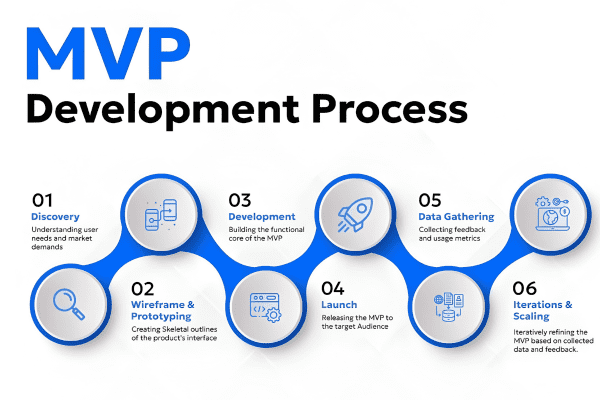
Step-by-Step: How to Create a Successful MVP
1. Identify the Problem You Want to Solve
Every strong MVP starts with a clear problem. What challenge does your product fix? Who will use it? Why would they choose it over alternatives? Understanding user pain points is the heart of MVP success.
2. Research Your Target Audience
Talk to real users. Study your competitors. Analyze market gaps. The better you understand your audience, the easier it becomes to shape your MVP.
3. Define the Core Value Proposition
Your MVP should focus on one central promise. What is the number-one feature that delivers the most value? This becomes the foundation of your build.
4. List Features and Prioritize Them
Break your feature list into three categories:
- Must-have features
- Nice-to-have features
- Future features
Your MVP must include only must-have features.
5. Choose the Right Tech Stack
A good MVP uses technologies that are easy to scale and maintain. Many teams prefer frameworks like React, Flutter, or Node.js because they speed up development.
6. Build a Simple and Clean UI
Your MVP doesn’t need a fancy interface, but it must be easy to use. A clean layout, simple navigation, and clear CTAs help users understand what to do.
7. Develop, Test, and Launch
Build fast, test early, and fix issues as you go. Launch to a small audience or a test group before going public.
8. Collect Real Feedback
Ask users:
- What do you like?
- What feels confusing?
- What is missing?
Honest feedback drives better decisions.
9. Improve and Iterate
Use insights to refine features, fix problems, and shape future updates. MVPs evolve and become stronger with each version.
Common Mistakes to Avoid When Building an MVP
- Building Too Many Features
- Ignoring User Feedback
- Over-designing the UI
- Skipping Market Research
Best Practices for Creating an MVP That Works
- Start Small and Expand
- Keep Development Fast
- Measure Everything
- Communicate with Users
- Plan for Scalability
For a real-world example of successful MVP and product design, check out our detailed WebOrgami Case Study — it shows how a web application went from idea to launch with thoughtful planning and execution.

Conclusion
Understanding how to create a successful MVP is one of the most essential steps for any startup or business building a digital product. An MVP is not just a development shortcut—it is a more innovative way of working. Instead of investing heavily in a complete product from day one, teams can test ideas, validate assumptions, and learn from real users. This approach reduces risk, saves money, and gives teams the confidence to build products that truly matter.
A successful MVP is built around clarity: purpose, features, and user needs. When development teams stay focused on the core value, they avoid unnecessary complexity and create products that are simple yet impactful. Once honest feedback starts coming in, the product naturally evolves into something more substantial and more aligned with user expectations.
For software development agencies, offering MVP development is more than just a service—it is a partnership. Clients rely on your expertise to guide them through research, feature planning, design, testing, and launch. By combining technical skills with user-centered thinking, agencies can help businesses avoid costly mistakes and move forward with confidence.
The journey doesn’t end at launch. An MVP grows and adapts based on real-world data. With each iteration, the product becomes more refined, more valuable, and more competitive in the market. In today’s fast-moving digital world, the companies that succeed are those willing to learn early, move quickly, and change when needed. And that journey begins with a straightforward step: creating a thoughtful, strategic MVP.